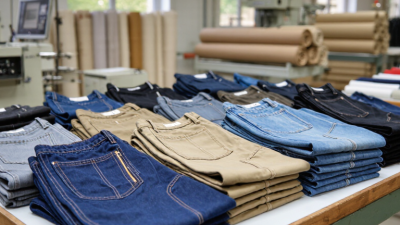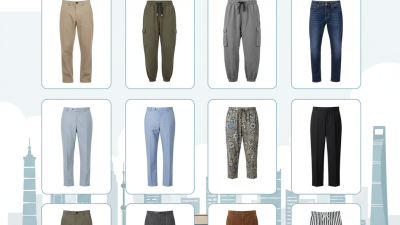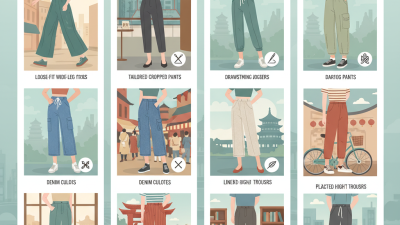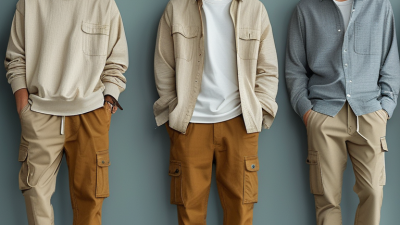
Finding a dependable supplier is rarely as simple as comparing factory prices. For global buyers, the right Casual Trousers manufacturer must balance fabric quality, production capacity, fit consistency, and export reliability.
This guide introduces China’s top 10 Casual Trousers manufacturers for international sourcing teams. It focuses on practical buying concerns, including cotton, linen, twill, stretch, and recycled fabric options. It also considers minimum order quantities, sampling procedures, factory experience, and quality-control systems. A reliable factory should explain its stitching standards clearly. It should also provide measurable details about shrinkage, colorfastness, fabric weight, and size tolerance.
Small details matter. A pocket that twists after washing can damage an entire retail program. Uneven waistbands create costly returns. Late samples can delay seasonal launches. These risks deserve more attention than attractive catalog photos.
The selection is based on publicly available company information, manufacturing capabilities, product specialization, and buyer-oriented service indicators. Where possible, buyers should verify certifications, audit reports, factory addresses, and recent production references independently. Claims can change.
Price alone is not enough.
Some manufacturers may suit large retail orders, while others are better for private-label collections or smaller trial runs. This guide offers a practical starting point, not a final purchasing decision. Supplier performance can vary by order, fabric, and communication quality. Buyers should request current samples and written specifications before signing contracts. That extra step may feel slow, but it often prevents expensive surprises.
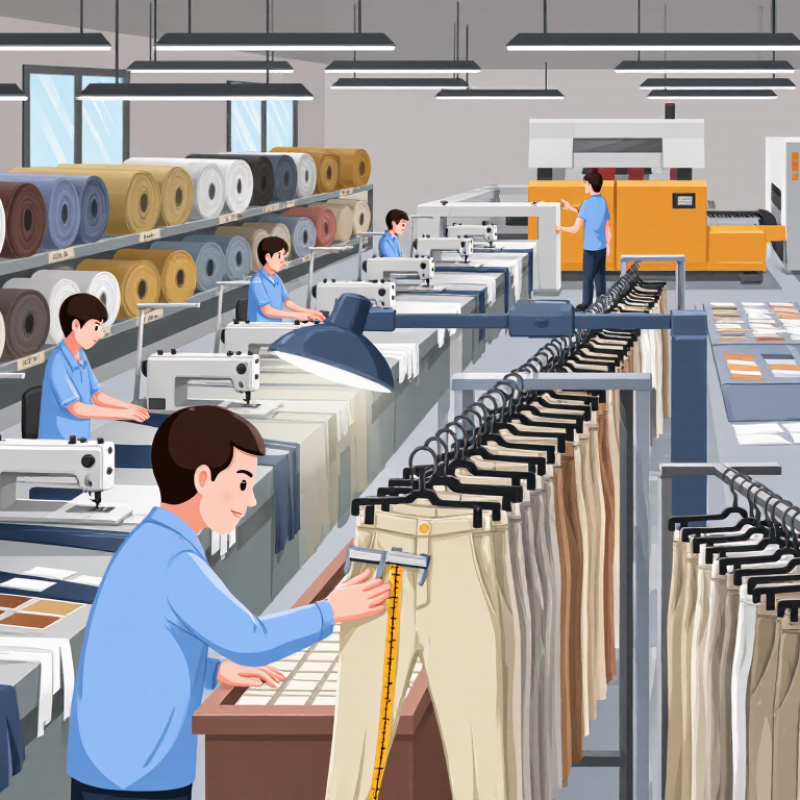
China’s casual trousers manufacturing industry sits inside a broad, export-oriented apparel ecosystem.
According to China’s National Bureau of Statistics, garment output reached approximately 22.4 billion pieces in 2023. This scale supports specialized production for cotton twill, denim, stretch blends, cargo styles, and lightweight travel trousers. China Customs also recorded about US$159 billion in clothing exports during 2023. These figures show manufacturing depth, not guaranteed supplier quality.
Important distinction.
For global buyers, the market includes high-volume factories and smaller, flexible workshops. Large plants often provide automated cutting, digital pattern management, and formal quality systems. Smaller facilities may support lower minimum orders and faster sampling.
Industry reports from the China National Textile and Apparel Council highlight intelligent manufacturing, energy efficiency, and supply-chain upgrading. Buyers should verify such claims through production records, fabric test reports, needle-control procedures, and pre-shipment inspections. Ask for actual defect data, not polished presentations.
Cost remains attractive, but labor, compliance, and fabric prices can change margins quickly. A 2024 quotation may not fit a 2025 program.
That is easy to miss.
For casual trousers, waistband recovery, seam strength, shrinkage, and colorfastness require careful testing. Approved samples should be compared with bulk garments after washing.
The industry is capable, but consistency still depends on factory supervision, precise tech packs, and realistic delivery calendars. A supplier ranking is only a starting point.
Choosing leading casual trousers manufacturers requires more than comparing prices. In supplier reviews, I examine fabric performance, stitching quality, production capacity, and export experience. A reliable factory should provide clear fiber content, fabric weight, colorfastness results, and shrinkage data. Sample trousers should match the approved specification after washing. Small differences matter.
I also assess factory audits, worker safety practices, quality-control records, and traceable production procedures. Verified certifications can support trust, but documents need current dates and credible issuing bodies. Buyers should check minimum order quantities, sampling fees, payment terms, and realistic lead times. A factory with strong equipment may still communicate poorly. That weakness can delay approvals. I also value factories that explain problems honestly instead of hiding defects. No factory is perfect.
Tips: Request one pre-production sample and one size-set sample. Test pocket strength, waistband recovery, seam durability, and color bleeding. Ask for recent inspection reports, not old files. Compare three quotations using the same fabric and packaging requirements. Visit the facility when possible, or arrange a live video inspection. Keep written records of every approved measurement.
China’s leading casual trousers manufacturers serve different buyer needs, from small trial orders to high-volume retail programs. The strongest suppliers usually operate integrated workshops with cutting, sewing, washing, and final inspection under one roof. This structure can shorten sampling cycles and improve communication.
One manufacturer specializes in cotton twill chinos, using compact weaving partners and reinforced pocket openings. Another focuses on stretch trousers, testing recovery after repeated washing. A third is experienced in cargo designs, with bar-tack reinforcement at stress points.
Several factories handle linen-blend trousers for warm climates. Their teams typically review shrinkage, colorfastness, seam strength, and measurement tolerance before shipment.
Practical details matter. Some manufacturers maintain automated spreading machines, while others rely on skilled manual cutting for flexible small batches.
One supplier offers reliable pattern development but has slower sample revisions during peak months. Another provides attractive washing effects, yet shade consistency needs closer approval. These limitations should remain visible during supplier evaluation.
Buyers should request current factory photos, production records, fabric test reports, and pre-shipment inspection procedures. A clear size chart also prevents costly rework.
In my sourcing experience, early comments on waistband pressure and pocket depth often save more time than late price negotiations. Quality is not always consistent across every product line. Independent verification still matters.
China Top 10 Casual Trousers Manufacturers for Global Buyers
For global buyers, product quality begins with consistent fabric control. The leading ten manufacturers typically inspect weight, color, shrinkage, and surface defects before cutting. A 240gsm cotton twill should feel stable, not stiff. Stitch density also matters around pockets, belt loops, and seat seams. Buyers should request wash-test results and size measurements from finished samples. Factory experience is useful here. It reveals problems that polished product photos cannot show.
Customization requires more than adding a logo. Reliable manufacturers can follow detailed tech packs, adjust patterns, develop private labels, and match approved colors. They should provide a clear sample process, revision records, and realistic minimum order quantities. Some factories support enzyme washing, garment dyeing, elastic waists, cargo pockets, and recycled fabric options. Ask for pre-production samples. Small changes can affect the entire fit.
Production capability depends on people, equipment, and control systems. A capable factory can explain monthly capacity without making careless promises. It should separate cutting, sewing, finishing, inspection, and packing stages. Buyers may also review inspection reports, social compliance documents, and shipment records. No supplier is flawless. Even experienced teams miss a loose thread or uneven hem. That is why independent inspections remain valuable. A factory may offer fast sampling, yet struggle with repeat orders. This weakness deserves attention, not excuses.eriwa
| Rank | Manufacturer Profile | Primary Production Region | Typical Product Focus | Common MOQ per Style/Color |
Typical Bulk Lead Time | Customization Capability | Quality-Control Practices | Indicative Capacity per Month |
Best Fit for Global Buyers |
|---|---|---|---|---|---|---|---|---|---|
| 1 | Profile A — Large-Scale Export Factory | Guangdong | Chinos, cotton trousers, work-casual bottoms | 500–1,000 pcs | 45–70 days | Custom fabrics, trims, labels, grading, packaging, and private-label patterns | Inline inspection, measurement checks, needle control, and final AQL inspection | 50,000–100,000 pcs | Large retail and wholesale programs |
| 2 | Profile B — Mid-to-High-End Tailoring Specialist | Jiangsu | Smart trousers, pleated pants, premium cotton blends | 300–600 pcs | 40–65 days | Pattern development, fit adjustments, waistband options, and specialty finishing | Pre-production samples, fabric testing, fit approval, and final inspection | 20,000–50,000 pcs | Premium fashion and boutique labels |
| 3 | Profile C — Flexible Private-Label Factory | Zhejiang | Casual trousers, cargo pants, drawstring styles | 200–500 pcs | 35–60 days | Low-to-medium volume development, custom silhouettes, washes, and packaging | Sample approval, sewing-line checks, color comparison, and carton audits | 15,000–40,000 pcs | Start-ups and online fashion retailers |
| 4 | Profile D — Denim and Garment-Wash Specialist | Guangdong | Denim-look trousers, twill pants, washed casual bottoms | 500–1,000 pcs | 50–75 days | Garment dyeing, enzyme wash, stone wash, distressing, and custom hardware | Wash approval, shade control, shrinkage testing, and seam-strength testing | 30,000–70,000 pcs | Casualwear and lifestyle collections |
| 5 | Profile E — Sustainable Fabric Producer | Fujian | Organic cotton, recycled polyester, linen-blend trousers | 500–1,500 pcs | 50–80 days | Material sourcing, recycled-content options, hangtags, and traceability documentation | Fabric composition checks, colorfastness testing, shrinkage testing, and final inspection | 20,000–60,000 pcs | Sustainability-focused importers |
| 6 | Profile F — Workwear and Uniform Specialist | Hubei | Utility trousers, uniform pants, durable cotton-polyester styles | 1,000–3,000 pcs | 45–75 days | Reinforced seams, multi-pocket layouts, logo embroidery, and reflective details | Fabric performance testing, seam inspection, size-set approval, and packing checks | 40,000–100,000 pcs | Corporate uniform and workwear buyers |
| 7 | Profile G — Small-Batch Development Factory | Shanghai Area | Fashion-led trousers, relaxed-fit pants, seasonal capsules | 100–300 pcs | 30–55 days | Rapid sampling, custom patterns, small color runs, and design consultation | Prototype review, first-piece approval, measurement reports, and random final checks | 8,000–25,000 pcs | Independent designers and emerging brands |
| 8 | Profile H — Stretch and Performance Casualwear Factory | Anhui | Stretch chinos, commuter pants, technical casual trousers | 500–1,000 pcs | 45–70 days | Stretch fabric sourcing, water-repellent finishes, bonded details, and ergonomic patterns | Stretch recovery, colorfastness, dimensional stability, and seam-performance testing | 25,000–60,000 pcs | Travel, commuter, and outdoor-casual retailers |
| 9 | Profile I — Value-Oriented Volume Manufacturer | Shandong | Basic chinos, uniform-style trousers, mass-market casualwear | 1,000–3,000 pcs | 40–65 days | Standard pattern adaptations, color matching, labels, and bulk packaging | Incoming fabric inspection, production-line checks, needle detection, and final audit | 60,000–150,000 pcs | Price-sensitive wholesale programs |
| 10 | Profile J — Premium Natural-Fiber Workshop | Guangxi | Linen trousers, hemp blends, relaxed resort pants | 200–600 pcs | 40–70 days | Natural-fiber sourcing, custom dyeing, relaxed silhouettes, and eco-packaging options | Fiber-content verification, shrinkage testing, shade approval, and workmanship inspection | 10,000–30,000 pcs | Resortwear and natural-fabric collections |
Note: The figures above are indicative industry benchmarks for comparable Chinese casual-trouser production profiles, not audited company-specific claims. Actual MOQ, capacity, certifications, pricing, and lead times should be confirmed directly during supplier qualification.
A strong supplier choice starts with verifiable production evidence, not attractive catalog photos. Ask each manufacturer for factory addresses, machinery lists, monthly capacity, and recent export references. During sampling, check waistband recovery, pocket strength, seam density, fabric weight, and shrinkage after washing. A useful trial order should test consistency, not only design quality. Request measurement reports for at least three production pieces. Small differences become costly at scale.
Material and compliance records also deserve careful review. Textile Exchange’s Materials Market Report 2024 states that global fiber production reached 124 million tonnes in 2023 and may rise to 160 million tonnes by 2030. This growth increases pressure on traceability and resource control. Ask suppliers to identify fiber origins, dyeing facilities, wastewater procedures, and recycled-content evidence. Independent laboratory testing can verify colorfastness, composition, and restricted-substance requirements. Records matter more than promises. Still, no audit proves perfect performance. Buyers should revisit suppliers after major orders, staff changes, or factory relocation.
Tips: Compare landed cost, not unit price. Confirm minimum order quantities, sample charges, lead times, payment terms, and corrective-action procedures in writing. A supplier offering an unusually low quote may be omitting testing, packaging, or realistic labor costs. My own evaluation mistake would be trusting a polished sample too quickly. Production control often reveals the truth. Use a scored checklist, keep dated evidence, and involve technical and purchasing teams before approval.