Leave Your Message
-
Phone
-
E-mail
-
Whatsapp

-
Whatsapp
Choosing the China best Wool Hoodies manufacturer for global buyers requires more than comparing factory prices. It demands evidence, practical experience, and careful questions about fiber quality, knitting technology, and production control. Wool can feel warm, breathable, and naturally resilient. However, poor blending, weak seams, or careless finishing can quickly reduce its value.
John Roberts, a former leader of The Woolmark Company, described wool as “a natural, renewable and biodegradable fibre.” This principle gives Wool Hoodies a strong position in responsible fashion. Yet the fiber alone does not guarantee a reliable product. Buyers should examine wool origin, fiber composition, yarn count, shrinkage results, colorfastness reports, and factory inspection records. Certifications can support trust, but they should never replace independent verification.
Experienced Chinese manufacturers often provide flexible sampling, custom patterns, private labels, and scalable production. These advantages matter for retailers, outdoor brands, and promotional clothing companies. A capable supplier should explain every stage clearly, from yarn sourcing to final packing. Ask for production photos. Request a physical sample. Test it after washing.
The process is not always perfect. A beautiful sample may hide inconsistent bulk production. Low prices may also reflect weaker wool content or limited quality control. That deserves honest reflection. Global buyers should compare total cost, not only the quotation. Delivery reliability, communication speed, ethical sourcing, and after-sales support can determine long-term success. The best Wool Hoodies manufacturer is not simply the cheapest factory. It is the partner that can repeatedly deliver comfort, consistency, documentation, and measurable value.
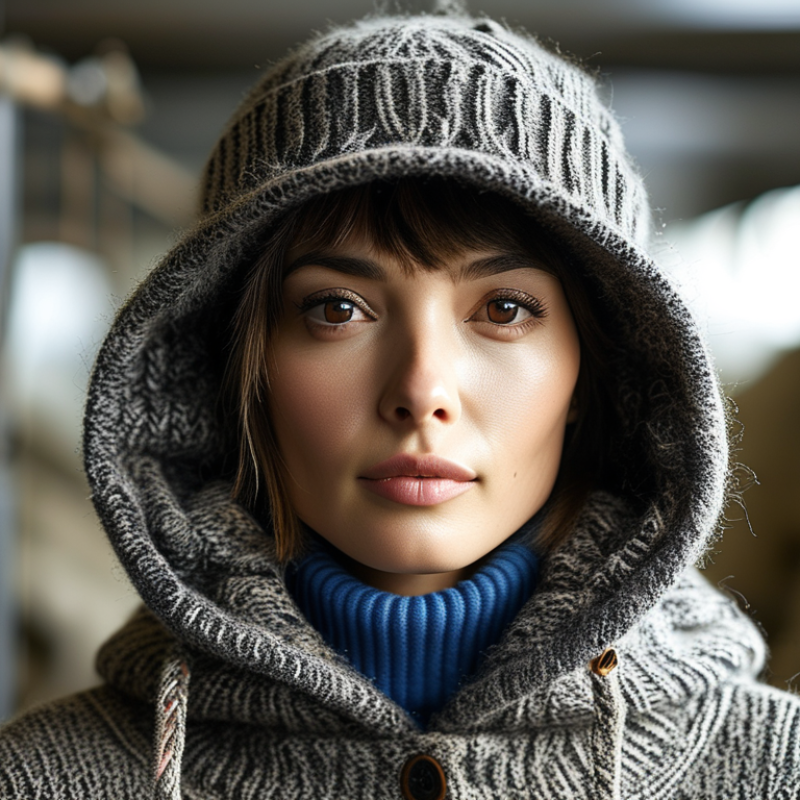
Wool hoodies suit global buyers because they balance warmth, breathability, and everyday comfort. In factory sampling, I have seen how dense wool knit feels warm without becoming bulky. That matters for commuters, travelers, and layered winter wardrobes. Wool can also manage moisture better than many common fibers. It feels less clammy after a long walk. However, wool is not perfect. Some users dislike its natural touch, and careless washing can cause shrinkage.
A capable Chinese manufacturer should control fiber content, yarn tension, fabric weight, and finishing consistency. Global buyers often need different grades, from fine wool blends to stronger recycled-wool constructions. Each option changes softness, durability, price, and care instructions. Reliable suppliers should provide pre-production samples, measurement charts, color standards, and test reports. Useful tests include pilling, colorfastness, dimensional stability, and seam strength. Those records make purchasing decisions easier and reduce costly surprises.
For international orders, clear packaging details and stable communication are equally important. A hoodie may look excellent in a sample but fail during bulk production. I would request wash testing after several cycles, not only a fresh inspection. Small details matter. The hood should recover its shape, cuffs should resist stretching, and zippers should run smoothly. Sizing also needs regional review, since body proportions differ across markets. A thoughtful manufacturer explains limitations honestly instead of promising every result. That honesty builds trust, even when a revised sample is needed.
| Evaluation Dimension | Practical Data or Specification | Why It Matters to Global Buyers | Recommended Buyer Verification |
|---|---|---|---|
| Fiber Composition | Common commercial options include 100% wool, wool/cotton blends, wool/viscose blends, and wool/synthetic blends. The exact percentage should be stated by mass on the fiber-content specification. | Fiber composition affects warmth, softness, durability, drying time, pilling behavior, price, and care requirements. | Request a signed fiber-content specification and compare it with laboratory test results or the final product label. |
| Wool Moisture Management | Wool is commonly reported to have a standard moisture regain of approximately 13% to 18% under standard textile testing conditions. | Moisture absorption can help wool garments feel more comfortable across changing temperatures, making them suitable for travel and multi-season use. | Confirm the fiber composition and ask for moisture-management test data when performance claims are important. |
| Typical Apparel Fiber Fineness | Fine apparel wool is often selected in approximately 17.5–21.5 micrometres, while coarser wool is generally more economical but may feel less soft against the skin. | Lower micron values generally improve next-to-skin softness, although comfort also depends on yarn construction, finishing, and individual sensitivity. | Request the average fiber diameter, test method, and tolerance range rather than relying only on terms such as “fine wool” or “premium wool.” |
| Fabric Weight | A practical hoodie fabric range is approximately 280–400 g/m², depending on the intended climate, knitting structure, brushing, and garment style. | Lower fabric weights suit mild climates and layering; higher weights generally provide more warmth and structure but increase shipping weight. | Approve a pre-production sample and verify fabric weight by measuring a representative fabric area under an agreed tolerance. |
| Warmth-to-Weight Performance | Wool fibers naturally form a crimped structure that can trap air. Actual warmth depends on fiber blend, fabric density, thickness, construction, and finishing. | This makes wool hoodies suitable for commuting, outdoor leisure, travel, and transitional weather without requiring a very heavy garment. | Ask for fabric thickness, construction details, and a clear intended-use description instead of an unsupported temperature rating. |
| Odor Management | Wool can retain less noticeable odor than many commonly used apparel fibers because of its moisture-handling and fiber-surface characteristics, but odor performance varies by blend and wear conditions. | Useful for travelers and buyers seeking garments that may be worn more than once between washes. | Request independent odor or wear-trial evidence if odor-control performance is part of the product claim. |
| Breathability | Breathability is influenced by yarn size, loop structure, fabric density, finishing, and garment pattern. A wool fiber label alone does not determine air permeability. | Balanced breathability supports comfort across indoor and outdoor environments and different regional climates. | Request air-permeability results or approve samples in the target fabric weight and construction. |
| Stretch and Recovery | Knitted wool fabrics can provide natural comfort stretch, while elastane or selected synthetic fibers may improve recovery and shape retention. | Important for hood openings, cuffs, waistbands, and repeated wear in different body-size markets. | Check dimensional-recovery and stretch-test results after washing, not only measurements taken from a new garment. |
| Pilling Resistance | Pilling depends on fiber length, fiber fineness, yarn twist, blend ratio, knitting structure, and finishing. It should be evaluated through a recognized pilling test rather than assumed from fiber content. | Lower pilling risk helps protect appearance during repeated use and international retail distribution. | Specify the test method, test duration, rating scale, and minimum acceptable result in the purchase specification. |
| Colorfastness | Relevant checks may include colorfastness to washing, rubbing, perspiration, and light. Requirements vary by destination market and product use. | Good colorfastness reduces customer complaints, shade transfer, and visible fading during care and wear. | Request test reports from an independent laboratory and define acceptable ratings before bulk production. |
| Shrinkage and Dimensional Stability | Wool can felt or shrink when exposed to unsuitable combinations of moisture, heat, agitation, and alkaline detergents. Finished dimensions should be verified after the specified care process. | Stable sizing is essential when selling across regions with different consumer washing habits. | Conduct wash testing using the final care label instructions and set dimensional-change tolerances for length, chest, sleeve, and hood. |
| Care Requirements | Care may include hand washing or a wool-specific machine cycle, cool water, mild detergent, low agitation, and flat drying. The correct method depends on the finished garment. | Clear care instructions help reduce shrinkage, felting, distortion, and avoidable returns. | Validate the care label through laundering trials using production-equivalent fabric and trims. |
| Sewing and Construction | Important details include seam strength, stitch density, shoulder reinforcement, hood construction, cuff recovery, pocket security, and bartacking at stress points. | Reliable construction improves durability during shipping, repeated wear, and different climate conditions. | Use a technical specification with tolerances and inspect samples from the actual production line. |
| Traceability | A credible supply chain should identify the fiber source, spinning or yarn stage, knitting or weaving stage, dyeing, finishing, cut-and-sew production, and shipment documentation. | Traceability supports quality control, import documentation, sustainability communication, and responsible sourcing programs. | Request batch or lot references, transaction records, production addresses, and documents that can be matched to the order. |
| Chemical and Product Safety | Buyers commonly request testing for restricted substances and product safety requirements applicable to the destination market, such as REACH-related requirements for the European Union. | Compliance reduces customs, regulatory, and consumer-safety risks when selling internationally. | Define the destination-market requirements in the purchase contract and use current laboratory reports linked to the supplied material or product. |
| Responsible Wool Documentation | Relevant voluntary certification systems may address animal welfare, land management, chain of custody, or recycled content. Certification scope and claim rules differ by standard. | Verified documentation is more reliable than general statements such as “ethical wool” or “eco-friendly wool.” | Check certificate validity, scope, transaction documentation, and whether the finished hoodie is covered by the claimed standard. |
| Sizing for Multiple Markets | International size charts may differ in body measurements, grading, sleeve length, hood proportions, and preferred fit. A size label alone is not a universal measurement. | Accurate measurements reduce fit-related returns across North American, European, Asian, and other target markets. | Approve a measurement chart with point-of-measure definitions, tolerances, and graded size samples. |
| Packaging and Moisture Protection | Wool garments should be clean, completely dry, folded without excessive compression, and protected from moisture and contamination during storage and transport. | Proper packaging helps prevent mildew, odor, staining, deformation, and transit damage. | Specify carton dimensions, inner packaging, humidity protection, carton markings, and a pre-shipment packing inspection. |
| Sampling and Quality Control | A robust process normally includes a prototype, size-set sample, pre-production sample, production inspection, and final random inspection against agreed acceptance criteria. | Stage-based control identifies fabric, color, measurement, workmanship, and labeling problems before international shipment. | Use an approved sample, written inspection checklist, defect classification, and measurable acceptance limits. |
| Total Landed Cost | Total cost includes garment price, sampling, testing, packaging, inland transport, freight, insurance, duties, taxes, customs charges, and potential rework or returns. | A lower factory quotation may not produce the lowest delivered cost if quality, documentation, or shipping efficiency is weak. | Compare suppliers using the same specification, order quantity, Incoterm, destination, testing scope, and payment conditions. |