Top Puffer Jacket Manufacturers in China for Global Buyers
Choosing a Puffer Jacket manufacturer in China involves more than comparing prices or browsing polished product photos. Global buyers need to assess construction, material options, production capacity, and communication before placing an order. A warm jacket can look convincing on a screen, yet feel bulky or lose loft after repeated wear. Small details matter.
This guide introduces manufacturers serving different sourcing needs, from custom designs to established export programs. It highlights practical points buyers can verify, including fabric specifications, insulation choices, stitching quality, sample policies, production timelines, and quality-control procedures. Where available, company credentials and documented processes can add useful context, but buyers should confirm claims directly. A neat catalog is not proof. Neither is a quick reply.
The right supplier depends on the intended market, target price, order volume, and product performance requirements. Requesting samples and clear quotations can reveal differences that product listings hide. It is also worth checking how a factory handles revisions, defects, and shipment delays. These steps take time. They can prevent costly surprises.
No manufacturer is perfect, and published information may not answer every question. Treat this overview as a starting point, not a final endorsement. Compare evidence, ask specific questions, and judge each supplier against your own standards. A dependable partnership is built on repeatable quality, realistic commitments, and clear communication—not attractive promises alone.
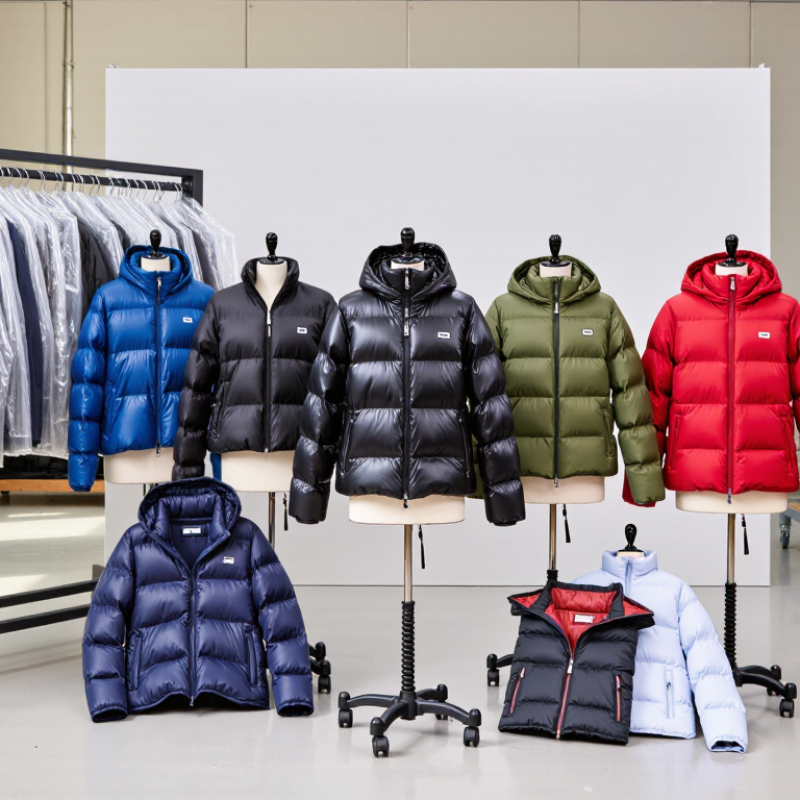
Puffer Jacket Manufacturing in China: Industry Overview
China’s puffer jacket industry draws on a broad network of fabric mills, insulation suppliers, trim makers, and sewing factories. This network can support different order sizes and construction needs, but capabilities vary between manufacturers. Some focus on lightweight synthetic-fill jackets; others handle down insulation, taped details, or complex quilting. Details matter. Shell fabrics must balance water resistance, breathability, and feel, while insulation needs even distribution to prevent cold spots. Buyers should ask how fill weight, fabric specifications, and stitching standards are recorded across production.
The manufacturing process typically moves from pattern development and material sourcing to sampling, bulk sewing, inspection, and packing. A sample can look excellent. Bulk consistency still needs checking. Clear specifications help: include measurements, stitch details, zipper requirements, labeling, and acceptable tolerances. For puffer jackets, inspections can focus on seam strength, loose threads, fill distribution, and smooth zipper operation. Lead times may shift when fabric colors or insulation are unavailable, so confirm material readiness before setting delivery expectations. A factory’s stated capacity is useful, but it does not guarantee a flawless order; buyers should compare samples, communication, and inspection records, then leave time to correct issues.
Top Puffer Jacket Manufacturers in China for Global Buyers
Puffer Jacket Manufacturing in China: Industry Overview
China’s textile and apparel exports provide a broad indicator of the country’s manufacturing and export capacity. These figures cover textiles and apparel collectively, not puffer jackets alone.
Source: China Customs data as reported by industry associations; values are approximate and shown in current US$ billions.
Key Production Regions and Manufacturing Capabilities
China’s puffer-jacket supply base is spread across several manufacturing regions. Zhejiang, particularly Pinghu, is known for down-apparel production and coordinated sewing, filling, and finishing. Jiangsu offers broad garment and fabric networks, while Guangdong suppliers are often suited to synthetic-shell development, trims, and rapid sampling. These are tendencies, not guarantees; capability varies by factory.
China Customs figures, summarized in the 2023 textile and apparel trade review, put exports at about US$293.6 billion. The WTO’s 2023 World Trade Statistical Review reported that China supplied 31.7% of global clothing exports in 2022. These figures show the scale of the apparel ecosystem, but they do not measure puffer-jacket expertise directly. Buyers should verify jacket-specific experience, production capacity, and quality controls.
On a factory visit, inspect baffle stitching, down-proof shell fabric, zipper alignment, and filling consistency. Ask how fill weight is checked between samples and bulk orders. Small differences show up fast. Request test records for insulation and water resistance, and clarify whether recycled shell fabrics affect lead times. A sourcing map helps, but it cannot replace an audit; even that can miss problems during peak-season production.
Leading Chinese Puffer Jacket Manufacturers for Global Buyers
Leading Chinese puffer jacket manufacturers serve global buyers through established textile, cutting, and garment-production networks. China’s textile and apparel exports reached about US$293.6 billion in 2023, according to figures reported by the China National Textile and Apparel Council from customs data. That scale offers sourcing options, but it does not prove that any individual factory can meet a buyer’s quality or delivery requirements. Details matter.
Ask manufacturers to document shell-fabric composition, insulation type, fill weight, and test methods. Textile Exchange’s Materials Market Report 2024 estimates that polyester made up 57% of global fibre production in 2023, a useful reminder that synthetic insulation and recycled-fibre claims need clear material records. For down-filled styles, request traceable sourcing documents and agreed testing criteria.
For either construction, inspect a physical sample: check baffle spacing, seam leakage, zipper operation, and how the jacket looks after washing. Small defects show quickly.
A factory audit and a production sample answer different questions. Verify capacity, subcontracting arrangements, inspection steps, and realistic lead times before confirming an order. Ask how the supplier controls shade differences between fabric lots and records corrections after inspection. A polished sample can still deceive. Specifications should include measurable tolerances, not just phrases such as “premium quality.” Even careful buyers may need to revise details after the first production run; record those changes and confirm the final sample in writing.