Leave Your Message

What Is a Skirts Set for Global Buyers?

A Skirts Set is a coordinated apparel package, usually pairing a skirt with a matching top, jacket, or knit piece. For global buyers, it offers a practical way to build a complete look with fewer sourcing decisions. The value is not only visual consistency. Buyers must examine fabric weight, stitching quality, size grading, color accuracy, and packaging details.

A reliable Skirts Set should feel comfortable during movement and remain presentable after washing. Cotton blends may support everyday use, while recycled polyester can offer wrinkle resistance and stable color performance. These choices need clear fiber labels and honest product specifications. A sample should be checked under natural light, not only in edited photographs. Small issues matter. A loose waistband can create returns.

Global purchasing also requires careful communication with factories and suppliers. Buyers should confirm measurement charts, minimum order quantities, production lead times, carton dimensions, and inspection procedures. Regional preferences can differ widely. A relaxed fit may suit one market, while another expects a sharper silhouette or longer hemline. There is no universal best design.

Experienced buyers should request pre-production samples and compare them with approved specifications. They should also review labeling, care instructions, and applicable market requirements before placing larger orders. A beautiful sample is encouraging, but it does not prove consistent production. That assumption can be costly. Responsible sourcing also includes transparent material information, fair supplier communication, and realistic delivery commitments. In practice, the strongest Skirts Set is not simply fashionable; it is measurable, adaptable, and dependable across different retail environments.
What Is a Skirts Set for Global Buyers?

What Is a Skirts Set? Definition, Components, and Buyer Terminology

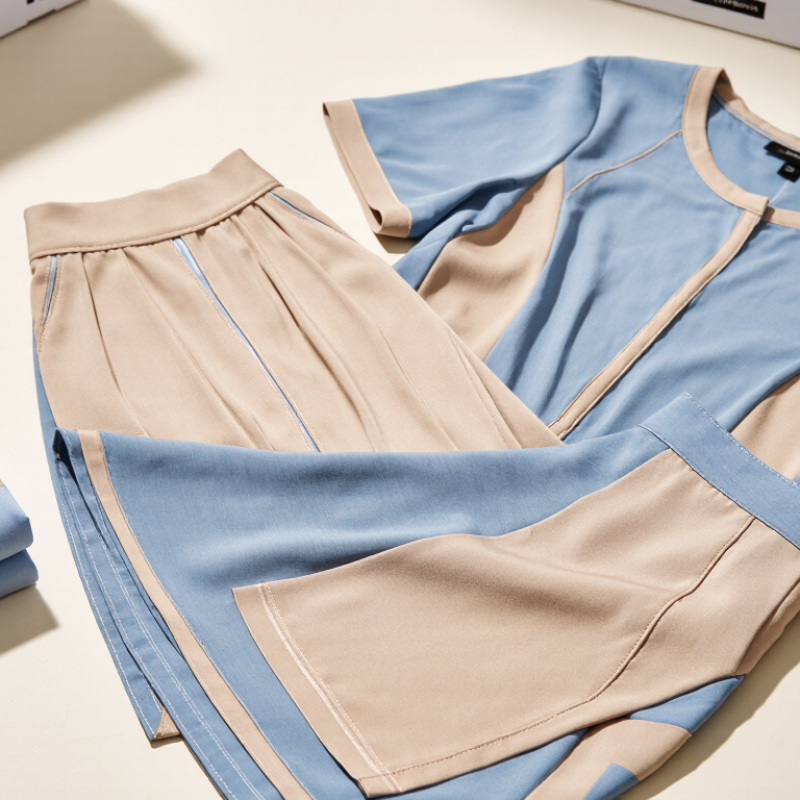
A skirts set is a coordinated outfit that includes a skirt and a matching top. The pieces usually share fabric, color, print, or decorative details. Buyers may call it a two-piece set, co-ord, matching set, or skirt outfit. These terms overlap, but they are not always identical. A co-ord can include separate pieces designed to mix with other garments. A skirts set usually suggests a planned combination.

The main components are the skirt and upper garment, such as a blouse, crop top, shirt, or jacket. Some sets also include a belt, lining, detachable bow, or matching inner layer. Global buyers should confirm fabric composition, size grading, closure type, measurements, and care labels. Product sheets should state whether the pieces are sold together or separately. This detail prevents costly misunderstandings. The term is not perfectly standardized, so assumptions can be risky.

Tips: Request a sample set before bulk purchasing. Check whether the top and skirt have consistent color and shrinkage. Review the waistband, seam finishing, zipper, and lining by hand. Ask for flat measurements, not only general size names. “Medium” can vary widely. In my experience, a clear tech pack improves communication, but it cannot replace physical inspection. Even professional buyers sometimes overlook small differences between the approved sample and production pieces.


Market Context: Global Apparel Reached $1.79T in 2023 (GVR)

What Is a Skirts Set for Global Buyers?

Market Context: Global Apparel Reached $1.79T in 2023 (GVR)

A skirts set usually includes a coordinated skirt and top. The pieces share fabric, color, or design details. For global buyers, this format offers an easy outfit solution for online and physical retail. According to Grand View Research, the global apparel market reached $1.79 trillion in 2023. That scale creates opportunity, but it also increases competition and buyer expectations. Customers now compare fit, fabric feel, price, and delivery reliability within seconds.

A practical skirts set should suit different shopping habits. Buyers may request breathable cotton for warm regions or heavier blends for cooler markets. Waist measurements, skirt length, lining, and stretch deserve careful attention. A beautiful sample can still fail when sizing changes across production batches. That risk is easy to underestimate. Product teams should review measurement charts, seam quality, colorfastness, and packaging before placing larger orders. Clear technical documents also reduce misunderstandings between suppliers and purchasing departments.

Tips: Request a size-set sample, not only one standard size. Test the waistband after repeated movement. Check whether the top and skirt remain visually balanced when worn. Ask for fabric composition and care instructions. Small details matter. Seasonal colors may attract attention, but dependable fit often supports repeat sales. Suppliers should also explain production limits honestly, because promising everything can create avoidable delays.

What Is a Skirts Set for Global Buyers?

The global apparel market was valued at approximately $1.79 trillion in 2023. The chart shows the estimated market trajectory through 2030 using a published 4.0% compound annual growth rate. A skirts set is part of the coordinated apparel segment, combining a skirt with a matching top or complementary piece for easier merchandising and styling.

Market size shown in USD trillions. 2023 is the reported baseline; 2024–2030 values are calculated estimates based on a 4.0% CAGR.

Material Choices: Polyester Held 57% of Fiber Output in 2023 (TE)

What Is a Skirts Set for Global Buyers?

A skirts set usually combines a coordinated top and skirt for easier styling and efficient retail planning. Material selection strongly affects comfort, durability, pricing, and environmental claims. According to Textile Exchange, polyester represented 57% of global fiber production in 2023. This figure explains its strong presence in international apparel sourcing.

Polyester offers useful performance for skirts sets. It dries quickly, resists wrinkles, and keeps printed patterns sharp after repeated wear. A lightweight woven fabric can suit summer collections, while a denser blend provides better structure.

However, cheap polyester may feel hot or develop pilling. Touch testing matters.

Buyers should request fabric weight, fiber composition, colorfastness, shrinkage, and seam-strength results. Recycled polyester can support a lower-impact product story, but documentation must verify its origin. Do not rely on vague sustainability language. Ask for recognized certificates and transaction records when required.

A practical sample should include sitting, walking, and washing tests. The waistband should remain secure without pressing the body. Zippers and lining deserve equal attention. Small defects become expensive at scale. A lower unit price may hide higher return costs, especially when sizing is inconsistent. Polyester remains commercially useful, yet comfort and responsible sourcing still need careful review.

Sizing and Quality: Apply ISO 8559-1 and AQL 2.5 Inspection Levels

What Is a Skirts Set for Global Buyers?

A skirts set usually combines a coordinated skirt and matching top. For global buyers, consistent sizing matters more than attractive photography. ISO 8559-1 provides common definitions for body measurements and measurement procedures. It helps teams record bust, waist, hip, and body height consistently. Measure the person, not only the garment. Then convert those measurements into a clear size chart, using centimeters or inches without mixing both. Skirt length, waistband position, and ease also need practical fitting checks. A rushed chart may look accurate but fail on different body shapes.

Quality control should include an agreed AQL 2.5 inspection level. AQL is a sampling method, not a promise that exactly 2.5% of garments may be defective. Buyers should define sample sizes and defect categories before production. Inspectors can check fabric holes, uneven stitching, loose threads, color mismatch, waistband twisting, and zipper function. Each garment should also be measured against approved tolerances. Do not treat AQL as a quality promise. It supports a decision, but weak specifications still create weak results. In production work, the first size chart is rarely perfect, so reviewing measurement feedback remains necessary.

Tips: Request a graded sample, a measurement sheet, and inspection photos. Check one complete set after washing. Keep signed tolerances and defect definitions with the purchase order.

What Is a Skirts Set for Global Buyers? - Sizing and Quality: Apply ISO 8559-1 and AQL 2.5 Inspection Levels

1. Skirts Set Product Definition

Data Dimension Recommended Buyer Specification Verification Method Acceptance Reference
Set composition One coordinated skirt plus one matching top, packed and labeled as a single retail set. Visual check and packing-list review All listed components present and correctly matched
Measurement basis Use body-measurement terminology and landmarks consistent with ISO 8559-1 before converting to garment dimensions. Review the measurement chart and measuring procedure Body measurements and garment measurements are clearly separated
Fit category Regular fit unless the purchase order specifies slim, relaxed, oversized, or another fit block. Compare approved sample, pattern, and measurement chart Production follows the approved fit block
Fabric composition State fiber content by percentage, for example: 95% cotton / 5% elastane, only when supported by laboratory or supplier documentation. Label review and, when required, fiber-composition testing Declared composition matches the approved specification
Care labeling Include washing, bleaching, drying, ironing, and professional-care instructions applicable to the actual fabric and construction. Label and care-instruction review Instructions are legible, durable, and appropriate for the product
Color coordination Top and skirt must match the approved color standard and be packed as the same colorway. Visual comparison under agreed lighting conditions No mismatched components or visible shade variation beyond the approved standard

2. ISO 8559-1 Body Measurement Framework for Size Planning

Measurement Dimension ISO 8559-1-Oriented Definition Typical Use in a Skirts Set Unit Buyer-Control Point
Stature Vertical body height measured from the floor to the top of the head. Size-range development and proportion planning cm Record the size population and grading assumptions
Bust girth Horizontal circumference around the fullest part of the chest or bust. Top circumference and ease allocation cm Do not use garment bust circumference as a substitute for body bust girth
Waist girth Horizontal circumference around the natural waist level. Skirt waistband and top waist shaping cm Specify whether the garment is measured relaxed, stretched, or both
Hip girth Horizontal circumference around the fullest part of the hips and buttocks. Skirt hip fit and silhouette control cm Use a consistent landmark and posture for all size development
Back waist length Vertical distance from the neck reference area to the natural waist level along the back. Top length, waist placement, and skirt rise coordination cm Confirm the exact start and end landmarks in the technical pack
Arm length Length measured between the defined shoulder and wrist landmarks when a sleeve is included. Sleeve length for long-sleeve or three-quarter-sleeve tops cm Specify arm position and measurement landmarks
Inside leg length Vertical length from the crotch reference area to the floor or specified lower landmark. Relevant only when the coordinated lower garment is a skort or has shorts lining cm Do not apply to a standard skirt unless an inner short is included

ISO 8559-1 provides terminology and procedures for body measurement. It does not by itself define a universal commercial size chart, garment ease, or finished-garment tolerances. Buyers should issue a separate measurement specification for each product.

3. Example Body Size Chart for Buyer Development

Size Code Stature (cm) Bust Girth (cm) Waist Girth (cm) Hip Girth (cm) Recommended Use
XS 160–164 80–84 62–66 86–90 Small body-measurement block; confirm against the target market
S 162–166 84–88 66–70 90–94 Base size option for development sampling
M 164–168 88–92 70–74 94–98 Common base size for fit approval, subject to buyer demographics
L 166–170 92–98 74–80 98–104 Grade from the approved base pattern, not by arbitrary proportional increases
XL 168–172 98–104 80–86 104–110 Check fabric stretch, waistband recovery, and seam strength carefully

The values above are an illustrative development chart, not a universal international size standard. Global buyers should replace them with the target market's approved body-measurement data.

4. Finished-Garment Measurement Points and Example Tolerances

Garment Component Measurement Point Example Base Size Spec. Example Tolerance Inspection Instruction
Top Half chest, measured 2.5 cm below armhole 49.0 cm ±1.0 cm Lay flat without stretching unless the specification states otherwise
Top Center-back length from neck point to bottom edge 57.0 cm ±1.0 cm Measure along the center back, excluding collar or neckline rib
Top Shoulder width 38.0 cm ±0.7 cm Measure between approved shoulder points
Skirt Waist width, relaxed 35.0 cm ±0.7 cm Measure waistband flat without applying tension
Skirt Hip width at specified location 49.0 cm ±1.0 cm Use the technical-pack distance from the waistband or waist seam
Skirt Side length from waistband top to hem 78.0 cm ±1.0 cm Measure with the garment flat and hem aligned
Skirt Hem sweep or circumference 132.0 cm ±1.5 cm Check the complete hem for unevenness and distortion
Set Component matching Same approved colorway and size code Zero mismatch permitted Inspect top, skirt, labels, hangtags, and polybag identification together

The finished-garment specifications and tolerances shown here are buyer-controlled examples. They are not automatically prescribed by ISO 8559-1.

5. AQL 2.5 Pre-Shipment Inspection Plan

Finished Lot Size General Inspection Level II Code Letter Sample Size AQL 2.5 Ac AQL 2.5 Re Application
91–150 units G 32 3 4 Inspect 32 units; accept at 3 or fewer applicable defects and reject at 4 or more
151–280 units H 50 5 6 Use when the lot falls within this quantity range
281–500 units J 80 7 8 Applicable under normal single sampling, General Level II
501–1,200 units J 80 7 8 Randomly select the sample across cartons, colors, and sizes
1,201–3,200 units K 125 10 11 Include proportional representation of all approved variations
3,201–10,000 units L 200 14 15 Suitable for a larger production lot under the stated sampling plan
10,001–35,000 units M 315 21 22 Use only after confirming the inspection standard and normal inspection status

The sample-size and acceptance figures above follow the commonly used ISO 2859-1 normal single-sampling arrangement, General Inspection Level II, for AQL 2.5. AQL is a sampling-system parameter, not a guarantee that a lot contains no defects. Critical defects should normally have a separate zero-acceptance requirement agreed in the purchase specification.

6. Defect Classification for Skirts Set Inspection

Defect Class Examples Suggested Acceptance Rule Buyer Action
Critical Unsafe sharp component, prohibited substance issue, incorrect mandatory label creating a regulatory risk, or construction failure that could cause injury. Zero acceptance unless local law or the purchase specification requires a stricter rule. Stop release and investigate the full lot and corrective action.
Major Incorrect size label, open seam, broken zipper, severe shade mismatch, wrong component, measurement outside tolerance, or conspicuous stain. Evaluate against the agreed AQL 2.5 plan or a stricter contractual requirement. Repair, rework, replace, or reinspect according to the approved disposition.
Minor Small loose thread, slight pressing mark, minor uneven stitch, or small packaging imperfection that does not affect function or saleability. Evaluate under the agreed minor-defect AQL and defect definitions. Correct where practical and monitor recurring process issues.

7. Global Buyer Documentation Checklist

Document or Record Required Information Release Status
Technical measurement specification Body-measurement references, garment POMs, base size, grade rules, tolerances, and measurement diagrams. Approved before bulk cutting
Approved reference sample Fit, workmanship, color, trims, labels, packaging, and component matching. Sealed or digitally approved before production
Material specification Fiber content, fabric weight, stretch and recovery where relevant, color standard, and performance requirements. Verified before or during incoming-material inspection
Inspection standard Lot definition, inspection level, AQL values, defect classification, measurement tolerance, and sampling method. Agreed before pre-shipment inspection
Packaging and labeling specification Size and care labels, country-of-origin information where required, barcode or carton marks, folding method, and assortment ratio. Checked before final packing and shipment release
Inspection report Lot quantity, sample size, defects by class, measurements, photos, carton review, and final disposition. Accepted, rejected, or conditionally released by the buyer

Sourcing Steps: MOQ, Incoterms, and EU REACH Compliance for Buyers

A skirts set usually includes a coordinated skirt and top, but global buyers must define every detail.
Waist measurements, fabric weight, lining, size grading, color tolerance, and packaging should appear on the specification sheet. Textile Exchange’s 2024 Materials Market Report states that polyester represented about 57% of global fiber production in 2023. This makes fiber composition and recycled-content claims important during supplier evaluation.
Start with the specification.

MOQ discussions should cover units per style, color, and size, not only the total order. A factory may accept 500 sets but require 200 pieces per color. Request a sample, pre-production approval, and a clear defect standard before confirming production.
Incoterms 2020 also need careful comparison. FOB may give buyers more control after loading, while DDP can simplify delivery but requires close review of duties, import responsibilities, and seller capability. Incoterms do not replace a sales contract or confirm product compliance.

EU REACH checks should begin before fabric cutting. REACH requires communication when a Candidate List substance exceeds 0.1% by weight in an article. Buyers should request current supplier declarations, chemical test reports, and material-traceability records. Testing should consider restricted dyes, accessories, coatings, and metal components.
The European Chemicals Agency regularly updates the Candidate List, so an old report may be insufficient. UN Comtrade data shows that apparel remains a major traded product category worldwide, increasing documentation pressure across supply chains.
A low MOQ is not automatically economical. Freight, testing, rework, and unsold colors can quietly erase the saving. I would recheck the size ratio twice.