Why Choose Career Dresses for Your Business?
Career Dresses can do more than satisfy a workplace dress code. The right dress can help a business present a polished, consistent image while giving employees practical options for long workdays. A tailored sheath, for example, may suit a client meeting; a softer fit could feel better during a day of travel or presentations. Details matter: fabric that resists creasing, pockets that hold a phone, and a hemline that stays comfortable when seated.
Fashion stylist and designer Rachel Zoe has said, “Style is a way to say who you are without having to speak.” Her observation helps explain why workwear choices deserve care. Clothing communicates before a meeting begins. Still, one dress will not suit every role, body, climate, or personal preference. A uniform look can feel professional, but it can also feel too rigid. That tension is worth considering.
For a business, choosing Career Dresses means balancing appearance with wearability. Look closely at fabric quality, sizing options, maintenance needs, and how the garments move during real tasks—not only in a product photo. Ask employees what works. Their feedback may reveal a problem a purchasing team overlooked. Fit is personal.
Thoughtful choices can support confidence and reduce daily outfit decisions, though clothing alone cannot create a healthy workplace culture. That part is less tidy. A useful guide should compare styles, costs, care requirements, and common trade-offs, helping businesses make a decision grounded in their team’s needs rather than short-lived trends.
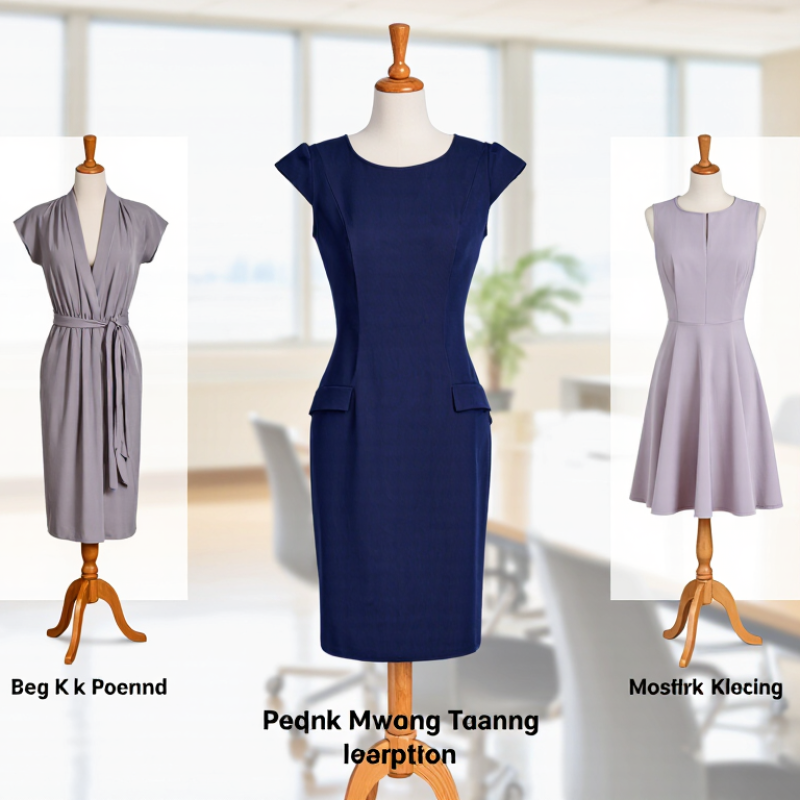
Define Career Dresses and Their Role in Professional Workwear
Career dresses are dresses designed for professional settings, balancing polish, comfort, and practical movement. They often have structured shoulders, opaque fabrics, modest necklines, and hems that stay manageable when sitting or walking. The category is not one fixed uniform. A sheath, knit midi, or shirt dress may all work, depending on workplace expectations and fit. Details matter. Sleeves that stay in place and linings that prevent cling can make a long day easier.
Career dresses help make workday dressing more straightforward while supporting a considered appearance. In client meetings, presentations, or reception work, a well-fitting dress can create a consistent impression without coordinating separate pieces. Comfort matters too: breathable fabric, room across the shoulders, and useful pockets may count more than a sharp silhouette. Check how the dress feels after sitting, reaching overhead, and taking the stairs. The mirror tells only part of the story.
Professional expectations vary across industries, teams, and climates, so “career dress” describes a function, not a strict formula. A style that suits a formal office may feel impractical in a warm, active workplace. That tension deserves attention. Fit, care instructions, and layering options are useful checks before choosing a dress. Even then, no single style suits every body or workday; personal comfort and workplace expectations still shape the choice.
Assess Workforce Relevance: Women Were 47% of the U.S. Labor Force in 2023 (BLS)
Women accounted for about 47% of the U.S. labor force in 2023, according to the Bureau of Labor Statistics. That figure makes women’s workwear needs relevant to businesses serving professional customers. Career dresses can offer a practical option for office days, client meetings, and events. But one statistic cannot describe every worker’s preferences.
A useful collection considers the details people face during a workday: walking between meetings, sitting for hours, or commuting in changing weather. Breathable fabric, secure pockets, comfortable linings, and cuts that allow movement can matter as much as appearance. Offer varied lengths and fits, and describe fabric care clearly. Small details count.
Not everyone chooses dresses. Roles, workplace norms, personal taste, and accessibility needs all shape clothing choices. Businesses should treat the 47% figure as context, not proof of demand. Review customer questions, returns, and fit feedback before expanding a range. That process may reveal gaps—or show that an assumption was wrong. A thoughtful career-dress selection can serve part of the workforce without pretending to represent all of it.
Benchmark Clothing Costs: Consumer Units Spent $2,041 on Apparel in 2023 (BLS)
Why Choose Career Dresses for Your Business?
The Bureau of Labor Statistics reports that consumer units spent an average of $2,041 on apparel in 2023. That figure covers many kinds of clothing, not just workwear or dresses. Still, it offers a useful budgeting reference: professional clothing competes with everyday apparel for the same household dollars. For a small business owner or employee, a career dress can make getting dressed simpler, especially on mornings filled with meetings, customer visits, or a commute. A $160 dress worn 40 times costs $4 per wear, before care expenses. The math is helpful, but real wardrobes are less tidy; some pieces simply get worn less than expected.
Tips: Set a monthly clothing limit before shopping. Check fit while seated, walk a few steps, and see how the fabric looks under office lighting. Choose a dress that works with shoes and layers you already own. Keep care instructions in mind, too: frequent special cleaning can raise the true cost. The BLS average is a benchmark, not a personal target. Your needs, climate, workplace, and existing wardrobe may point to a very different budget.
Compare Fit, Fabric, Care, and Dress-Code Needs for Business Use
Choosing career dresses for business starts with fit, not the size on the label. Sit, reach for a folder, and walk a few steps before deciding. The shoulder seams should sit flat, and the skirt should not pull across the hips when you sit. Test the movement. A dress that feels polished while standing may feel restrictive by lunchtime. I once overlooked a tight sleeve because the mirror view looked neat. That small mistake made desk work uncomfortable.
Fabric matters just as much. Midweight knits often resist wrinkles and allow movement, while woven fabrics can look crisp but may need more careful pressing. Check the care label before buying several dresses for a busy week. A garment that requires frequent dry cleaning may be less practical than one that can be machine-washed gently. Still, washable fabric can lose shape over time; inspect seams and hems after laundering.
Dress codes vary by workplace, so compare the dress’s neckline, hem length, and overall formality with what colleagues actually wear. A simple knee-length style may suit client meetings, while a softer knit can work for a quieter office day. When expectations are unclear, ask a manager rather than guessing. One awkward detail can distract: a sheer panel may need a slip, and a loud print may feel out of place in a conservative meeting.
Evaluate Versatility, Cost per Wear, and Brand Consistency in Dress Selection
Why Choose Career Dresses for Your Business?
Evaluate Versatility, Cost per Wear, and Brand Consistency in Dress Selection
A career dress earns its place when it works across real workdays: desk meetings, client visits, and quick trips outdoors. Look for pockets, comfortable armholes, and fabric that stays presentable after sitting. A simple cut can pair with a jacket or cardigan, but not every dress suits every role. Test it through a full workday before ordering several.
Cost per wear makes comparisons clearer. A $120 dress worn for 60 shifts costs $2 per wear; worn 30 times, it costs $4. Check care labels and fabric durability, too. WRAP’s Valuing Our Clothes report found that extending a garment’s active life by nine months could reduce its carbon, water, and waste footprints by 20–30%. That is a useful benchmark, not a guarantee for every dress. Consistent colors and silhouettes can also make team photos and client-facing events feel coordinated. Still, a matching rack can look stiff. Allow room for different body shapes, climates, and personal comfort.