Global wholesale buyers are entering a cautious eveningwear market. The State of Fashion 2025, published by McKinsey & Company and The Business of Fashion, forecasts low single-digit fashion growth. It also highlights stronger consumer sensitivity to price, quality, and value. These pressures make product selection more important than simple visual appeal.
This guide introduces 10 Best Evening Dresses for Global Wholesale Buyers. Each style is considered through practical wholesale criteria. These include fabric performance, sizing consistency, minimum order quantities, production lead time, and resale potential. A satin column dress may photograph beautifully, yet wrinkle easily during shipping. A beaded gown may attract attention, but its labor cost can reduce margins. Small details matter. Stitching, lining, zipper strength, and color accuracy can influence repeat orders.
Grand View Research’s formalwear analysis identifies occasion clothing as a continuing growth category, supported by weddings, galas, celebrations, and professional events. Meanwhile, WGSN trend reports continue to emphasize adaptable silhouettes, refined shine, and commercially wearable color palettes. These signals are useful, but they are not universal rules. Buyers in Dubai may prioritize embellished modest designs, while European retailers may prefer clean tailoring and lighter construction.
No ranking can fit every market. That limitation deserves attention. Wholesale success depends on local climate, customer age, event culture, and price positioning. The selected Evening Dresses therefore balance trend relevance with practical buying concerns. Expect strong silhouettes, realistic merchandising notes, and a few choices that may challenge conventional assumptions. sermitsiaq
10 Best Evening Dresses for Global Wholesale Buyers
Understanding evening dress demand requires more than watching seasonal color charts. Wholesale buyers often compare order data, customer feedback, and local event calendars. A floor-length satin dress may sell well for formal dinners in one market. The same style may move slowly where shorter cocktail dresses are preferred. Demand shifts quickly.
In my experience, reliable buyers study fabric weight, lining quality, size distribution, and delivery timing together. Velvet can perform strongly in cooler regions, while lightweight chiffon suits warmer venues. Neutral shades often support repeat orders, but vivid colors attract attention during holiday periods. Small details matter. Beading, adjustable straps, and secure closures can reduce return concerns. However, forecasts are never perfect. Some purchasing decisions still depend on weather, venue trends, and sudden social events.
For global wholesale programs, the strongest evening dress selection usually covers several price levels and silhouettes. Buyers may request a fitted gown, an A-line style, a modest long-sleeve option, and a practical cocktail dress. Clear measurement charts prevent costly misunderstandings across markets. Suppliers should also provide fabric composition, care instructions, production timelines, and quality inspection records. These details build trust without exaggerated claims. I have learned that rushing into a large order can create excess stock, even when early samples look promising. Trial quantities and regional sales testing often provide safer evidence.
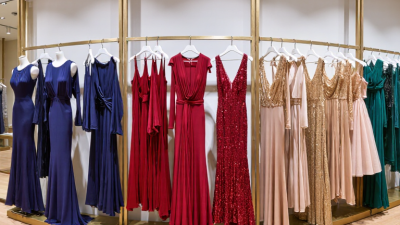
When evaluating wholesale evening dresses, start with fabric performance rather than photographs. Satin should reflect light evenly, without dull patches or oil-like streaks. Chiffon needs clean edges and controlled movement. Stretch fabric should recover after fitting. Small flaws become expensive across hundreds of units.
Fit consistency matters more than a single attractive sample. Measure bust, waist, hip, shoulder, and dress length on several sizes. Check seam alignment, zipper strength, lining coverage, and bead attachment by hand. A sample may look excellent. Production can still vary. Request a size set before confirming a large order, especially for fitted silhouettes. Color approval also needs physical swatches, because screens distort evening shades.
Wholesale buyers should examine minimum order quantities, production time, packaging, and defect policies together. A low unit price may hide weak stitching, delayed shipping, or costly rework. Ask for inspection photos and a clear replacement process. Confirm fiber information, care labels, and documentation meet the destination market’s requirements. Keep written records of approved measurements and materials. I have found that rushed approvals create avoidable disputes. Leave room for one correction cycle. It may feel inefficient, but it protects cash flow and customer trust.
This chart presents a practical 100-point evaluation framework for comparing wholesale evening dresses. Product quality, workmanship, fit consistency, price, and delivery performance receive the highest weighting because they directly influence customer satisfaction, return rates, and wholesale profitability. Buyers can adjust the weighting according to their market, sales channel, and order volume.
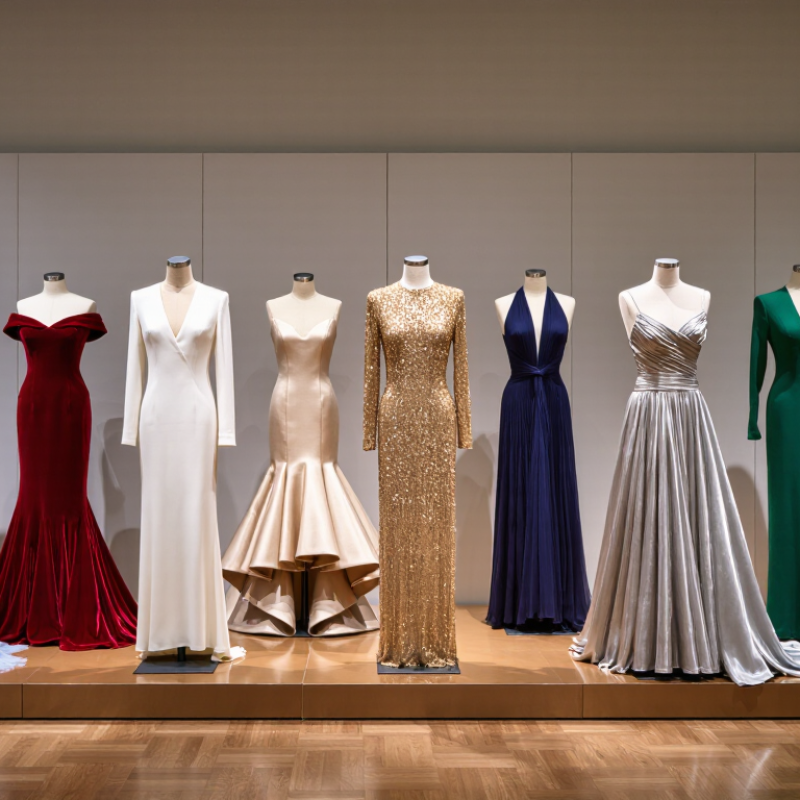
Global wholesale buyers need evening dresses that travel well across cultures, climates, and retail channels. The strongest international assortment usually combines ten proven styles: satin slip dresses, chiffon A-line dresses, mermaid gowns, off-shoulder dresses, one-shoulder designs, long-sleeve velvet dresses, sequined column gowns, high-low dresses, modest empire-waist dresses, and cape dresses. Each style serves a different customer and occasion. Neutral shades, jewel tones, and adjustable details can improve regional flexibility. Soft lining, secure closures, and accurate size charts also support fewer returns.
From wholesale experience, fabric performance matters as much as appearance. Chiffon should recover after packing, while satin needs careful folding to reduce permanent creases. Velvet can feel luxurious, but it may be too warm for some markets. A dramatic train attracts attention, yet it can limit everyday formalwear sales. No selection is perfect. Buyers should test samples before placing larger orders. Checking stitching, zipper strength, seam balance, and color consistency is essential. Product photos should show movement, neckline depth, and fabric texture clearly.
Tips: Offer core styles in several lengths and colors. Keep embellishment moderate for easier international selling. Request measurements in centimeters and inches. Review local preferences before confirming quantities. A modest neckline may perform better in one market, while a bolder shoulder design may lead elsewhere. Track customer feedback after each season, even when sales look strong. Small complaints often reveal sizing or comfort problems.
For global wholesale buyers, an evening dress should look elegant and remain practical after shipping. Fabric choice affects appearance, comfort, and return risk. Satin offers a smooth shine, but it can show creases quickly. Chiffon feels light, while lining quality prevents transparency. Stretch fabrics improve movement, but excessive elasticity may weaken shape retention. Request fabric composition, weight, colorfastness, and shrinkage data before placing a large order.
Sizing requires more than a standard chart. Compare bust, waist, hip, shoulder, and dress length measurements in centimeters. Ask for tolerance limits, especially around fitted seams. I have found that petite and plus-size adjustments often receive less attention. No size chart is perfect. Review a physical sample on different body types when possible. Check zipper strength, hem consistency, bead attachment, and seam finishing under bright light. Small flaws become expensive across hundreds of units.
Tips: Keep a measurement record for every approved sample. Request pre-shipment photos and random inspections. Confirm packaging protects delicate surfaces from moisture and crushing. For compliance, ask suppliers about fiber labels, care instructions, flammability requirements, chemical restrictions, and children’s-product rules when relevant. Requirements differ by destination, so verify current regulations with qualified local professionals. A certificate alone may not cover every material or market. That detail is easy to miss.
| No. | Evening Dress Style | Recommended Fabric & Typical Weight | Wholesale Size Range | Quality Checkpoints | Compliance Considerations | Best Retail Use |
|---|---|---|---|---|---|---|
| 1 | Satin Slip Dress | Polyester satin or recycled polyester satin; approximately 90–140 g/m² | XXS–4XL; adjustable straps recommended | Check fabric snag resistance, seam security, shade consistency, lining opacity, and smooth zipper operation. | Verify fibre-content labeling; assess colorfastness, pH, and restricted substances according to the destination market. | Bridesmaid collections, cocktail events, and occasionwear capsules |
| 2 | Chiffon A-Line Gown | Polyester chiffon with polyester lining; shell approximately 60–100 g/m² | XS–3XL; petite and long lengths can improve fit coverage | Inspect panel alignment, rolled hems, lining coverage, seam puckering, and resistance to pulls. | Confirm transparent-material labeling where required and test color transfer, especially for dark shades. | Formal dinners, graduation events, and wedding guestwear |
| 3 | Velvet Wrap Dress | Polyester velvet or stretch velvet; approximately 220–320 g/m² | XS–3XL; wrap construction accommodates moderate fit variation | Check pile direction, crushed areas, stretch recovery, waist-tie reinforcement, and color depth. | Review care-label accuracy and test dimensional stability after the specified care process. | Autumn and winter occasionwear |
| 4 | Sequin Column Dress | Polyester sequin fabric with polyester lining; approximately 250–450 g/m² | XS–2XL; consider a stretch lining for movement | Check sequin attachment, sharp-edge control, lining comfort, hem strength, and zipper protection. | Assess embellishment attachment and ensure labeling identifies all textile fibres and decorative components as required. | Holiday parties, gala events, and nightlife collections |
| 5 | One-Shoulder Jersey Dress | Viscose/elastane or polyester/elastane jersey; approximately 180–260 g/m² | XS–4XL; stretch fit should be graded by size | Test stretch recovery, neckline stability, opacity, seam elasticity, and resistance to pilling. | Verify fibre labels and care instructions; check colorfastness and pilling performance for repeated wear. | Versatile cocktail and semi-formal assortments |
| 6 | Lace Overlay Midi Dress | Polyamide or polyester lace over polyester lining; approximately 140–220 g/m² combined | XS–3XL; offer separate bust and waist measurements | Inspect motif matching, lace edge finishing, lining attachment, snag resistance, and neckline coverage. | Ensure accurate fibre disclosure for shell and lining; check azo dyes and other restricted chemicals where applicable. | Day-to-evening collections and modest formalwear |
| 7 | Pleated Halter Dress | Polyester georgette or lightweight crepe; approximately 100–180 g/m² | XS–3XL; adjustable neck and waist details recommended | Check pleat uniformity, heat-set durability, hem balance, neck-tie strength, and static control. | Confirm care labeling reflects pleat maintenance requirements and test dimensional stability. | Resort formalwear and warm-climate evening assortments |
| 8 | Taffeta Ball Gown | Polyester taffeta with structured lining; approximately 150–220 g/m² | XS–3XL; structured bodice requires precise measurement charts | Check bodice support, boning ends, skirt volume, lining comfort, seam load, and hem symmetry. | Evaluate flammability requirements for the destination market and verify trims are securely attached. | Balls, ceremonies, and high-formality events |
| 9 | Crepe Mermaid Dress | Polyester crepe or stretch crepe; approximately 180–280 g/m² | XS–3XL; use graded hip and length measurements | Inspect silhouette balance, stretch recovery, seam pressing, lining mobility, and zipper stress points. | Verify fiber-content and care labels; test colorfastness, seam strength, and restricted substances. | Bridal eveningwear and red-carpet-inspired collections |
| 10 | Embroidered Mesh Dress | Polyester mesh with embroidered overlay and polyester lining; approximately 180–350 g/m² combined | XS–3XL; include stretch and non-stretch measurement charts | Check embroidery density, thread trimming, mesh recovery, lining coverage, and embellishment attachment. | Review decorative-component safety, fiber labeling, needle and sharp-edge control, and destination-market chemical limits. | Special-occasion boutiques and premium eventwear |
| Buyer verification note: Fabric weights, measurements, performance results, and compliance status can vary by supplier and production lot. Before placing a wholesale order, request a size set, pre-production sample, fibre-content declaration, care-label artwork, restricted-substance test report, and destination-market compliance documentation. Common checks may include colorfastness, pH, dimensional stability, seam strength, pilling, flammability where applicable, and requirements under relevant textile-labeling and chemical-safety regulations. | ||||||
For global wholesale buyers, an evening dress supplier should be compared beyond catalog photos. Request a current sample, fabric composition, size chart, and stitching photos. Check lining, zipper movement, bead security, and seam consistency under bright light. Ask whether the sample matches bulk production. It may not. That gap matters.
Compare landed cost, not unit price. Add sample fees, grading charges, packaging, freight, duties, and inspection costs. Ask for tiered pricing at realistic quantities. A cheap quote can hide a high minimum order or expensive alterations. Confirm lead time in writing, including fabric sourcing and rework days. Payment milestones should connect to measurable steps, such as an approved sample and passed pre-shipment inspection. Clarify Incoterms, currency, bank charges, and cancellation terms before paying.
Supplier reliability needs evidence. Request business registration details, production capacity, recent quality records, and trade references where available. Use a small trial order before committing to hundreds of pieces. Measure five dresses from the shipment, not just one. Review shade differences, hem length, and labeling. I would not ignore a supplier who answers slowly, but repeated vague replies deserve caution. My comparison sheets sometimes overvalue price; delivery accuracy and correction speed often protect margin better. Leave room for weather, port delays, and design changes. Good terms should survive an uncomfortable conversation.