Leave Your Message

2026 Best Tank Top Styles for Wholesale Buyers?

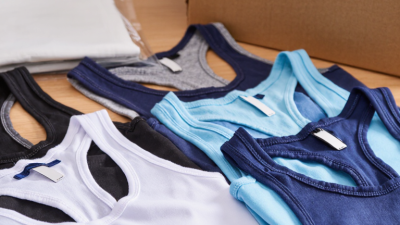
Tank Top assortments can look simple on a line sheet, but small differences shape how well they sell. In 2026, wholesale buyers will need to balance familiar silhouettes with fresh colors, dependable fabrics, and practical size ranges. This guide explores styles worth considering, from clean basics and fitted ribbed tops to relaxed cuts designed for layering. A ribbed neckline feels different from a wide scoop. A cropped hem serves a different customer than a longer, easy-fit silhouette.

Fit matters. Buyers should review garment measurements, not rely on labels alone, since sizing can vary between suppliers. Fabric weight, stretch, opacity, and recovery also deserve close attention. A soft hand feel may impress in a sample, but repeated wear can reveal weak seams or fabric that loses shape. Ask suppliers about fiber content, construction, available colors, and minimum order quantities. Then compare samples under ordinary conditions, including after washing, where possible. Details count. Stitching, straps, hems, and color consistency can affect both presentation and customer satisfaction.

No single style works for every store, region, or customer. Trend forecasts can help guide buying, but they are not guarantees; that part is easy to overlook. Consider your sales history, climate, price point, and the pieces customers already wear. A narrow test order may provide useful feedback before a larger commitment. This overview offers a practical framework for comparing 2026 Tank Top styles, while leaving room for local preferences and the occasional unexpected bestseller.
2026 Best Tank Top Styles for Wholesale Buyers?

Tank Tops in 2026: Key Types and Market Basics

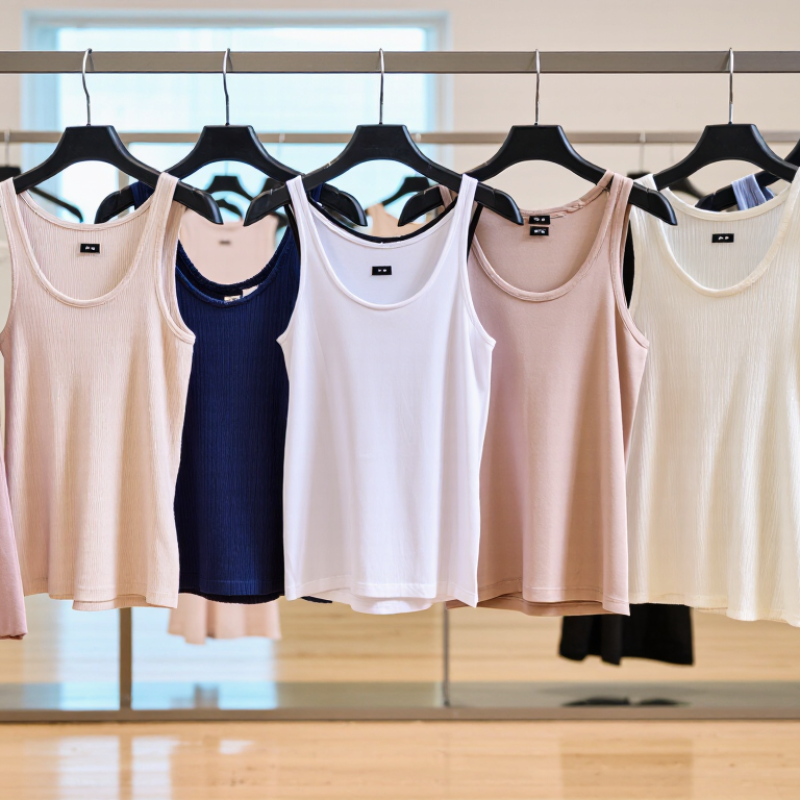
Tank tops in 2026 range from close-fitting ribbed basics to boxy cuts, cropped silhouettes, racerbacks, and lightweight performance singlets. For wholesale buyers, these are not interchangeable. A ribbed cotton style suits layered everyday wear, while a quick-drying polyester blend is more practical for training. Check neckline depth, armhole coverage, hem length, and fabric recovery on physical samples. Small fit differences can change how a style works across sizes.

124 million tonnes global fiber production reached in 2023
57% polyester
20% cotton

Material choices matter, too. Textile Exchange’s Materials Market Report 2024 estimates that global fiber production reached 124 million tonnes in 2023; polyester accounted for 57% and cotton for 20%. These figures describe the wider textile market, not tank tops alone. Still, they show why buyers should compare fiber content, fabric weight, and supplier documentation rather than relying on a “natural” or “performance” label. Feel the fabric. Wash-test it.

about US$406 billion estimated global activewear market in 2024

For a broader demand signal, Grand View Research estimated the global activewear market at about US$406 billion in 2024, with continued growth forecast through 2030. Activewear is only one part of the tank top market, so this figure should not be treated as a direct sales forecast. Build a range around distinct uses, then review sample fit, color consistency, and replenishment timing before placing larger orders. One awkward point: trend forecasts cannot tell you which neckline will sell in your customer’s market. Small test orders can help expose that uncertainty.
Popular Tank Top Silhouettes for Wholesale Buyers

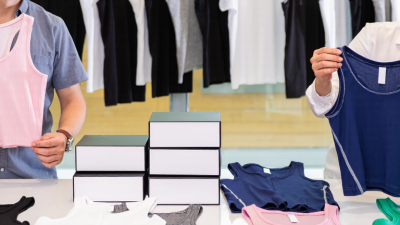
Tank tops are not one simple shape. Wholesale buyers often compare classic crew-neck cuts, racerbacks, muscle tanks, and relaxed boxy silhouettes. A classic cut suits everyday layering, while a racerback leaves the shoulders open and works well for active collections. Muscle tanks use wider armholes and a broader shoulder line. They feel casual, but overly deep openings can limit customer appeal. Boxy styles add room through the body and pair naturally with high-waisted bottoms. Small pattern changes matter. Even a two-centimeter difference in body length can alter the fit.

When reviewing samples, check the neckline after washing, not only straight from the package. Rib binding should lie flat, and armholes should allow movement without exposing too much. Compare garment measurements across sizes; a style that fits well in medium may become unbalanced in larger sizes. Fabric weight also changes the silhouette. Lightweight jersey drapes softly, while heavier cotton holds a squarer shape. No cut suits every customer, and trend forecasts can miss. That is worth remembering.

Tips: Request samples in at least two sizes. Test them on different body types, then record length, width, and shrinkage. Keep the most versatile silhouette, but do not assume it will be your strongest seller.

2026 Best Tank Top Styles for Wholesale Buyers: Popular Tank Top Silhouettes

Tank Top Silhouette Typical Design Details Common Fabric Options Suitable Retail Segments Wholesale Planning Notes
Classic Crew-Neck Rounded neckline, standard shoulder coverage, and a straight or gently shaped body. Cotton jersey; cotton-polyester jersey; rib knit. Everyday basics, casualwear, uniforms, and layering collections. A versatile core style. Consider a range of neutral colors and a size run that matches the intended customer group.
Racerback Shoulder straps join or narrow toward the upper back, allowing greater shoulder movement. Cotton jersey; polyester or nylon stretch knit; cotton-spandex blends. Activewear, training apparel, summer casualwear, and performance-inspired collections. Check armhole coverage, strap placement, and stretch recovery. Fabric choice should suit the garment’s intended activity level.
Ribbed Fitted Tank Close-fitting shape with vertical rib texture; may have a scoop, crew, or square neckline. Cotton rib; cotton-spandex rib; viscose or modal rib blends. Fashion basics, layering ranges, and casual women’s or unisex apparel. Confirm the fabric’s stretch and recovery after wear. Rib structures can fit differently from smooth jersey, so review garment measurements.
Relaxed or Boxy Tank Looser body, straighter side seams, and often a wider armhole or dropped shoulder line. Cotton jersey; linen or cotton-linen blends; lightweight woven fabrics. Resortwear, streetwear, relaxed casualwear, and warm-weather collections. Review body width and length together to maintain the intended proportion. Lightweight fabrics can drape differently from heavier jersey.
Scoop-Neck Tank Deep, rounded neckline with a simple sleeveless body; available in fitted or regular cuts. Cotton jersey; cotton-modal blends; rib knit. Layering basics, casualwear, and seasonal essentials. Specify neckline depth and binding construction clearly. These details influence coverage, shape retention, and the final appearance.
Square-Neck Tank Angular neckline with a straight upper edge and straps that may be narrow or wide. Rib knit; cotton-spandex jersey; double-layer stretch knit. Contemporary fashion basics and women’s casualwear. Check neckline stability and strap placement during sampling. A suitable stretch fabric can help the neckline sit smoothly.
Longline Tank Extended body length, commonly paired with a fitted or relaxed silhouette and a straight or curved hem. Cotton jersey; stretch jersey; polyester blends for active styles. Activewear, layering, casual basics, and extended-coverage apparel. Set finished body length by size and intended use. Review hem movement and coverage on the target fit model or sample size.
Crop Tank Shortened body length, often with a fitted shape, wider straps, or a square or scoop neckline. Rib knit; cotton-spandex jersey; lightweight stretch knit. Young-adult fashion, summer collections, and coordinated casual sets. Define the crop length and intended rise or layering combination. Offer clear product measurements to support accurate retail descriptions.
High-Neck Tank Higher front neckline with broad or narrow shoulder coverage; may have a simple back or racerback. Cotton jersey; rib knit; stretch performance fabric. Layering ranges, active-inspired apparel, and modern casualwear. Assess neck opening, binding, and comfort in the selected fabric. Keep front and back coverage specifications consistent across sizes.
Woven Camisole-Style Tank Lightweight woven body, usually with narrow adjustable or fixed straps and a draped fit. Woven cotton; viscose; polyester crepe; cotton-linen blends. Warm-weather fashion, resortwear, and dressier casual collections. Plan for woven-fabric behavior, including seam finishing and possible shrinkage. Confirm strap adjustability and opacity requirements.

Fabrics, Fits, and Features That Define Each Style

Fabric choice sets a tank top’s hand feel, cost, and performance. Textile Exchange’s Materials Market Report 2024 estimates global fiber production reached 124 million tonnes in 2023; polyester made up 57%, while cotton represented 19%. Those figures show why wholesale ranges often need both options. Cotton jersey feels soft and breathable, but can lose shape after repeated washing. Polyester dries quickly and holds color well, though some buyers may find it less comfortable in heat.

Fit changes how the same fabric sells. A classic crew-neck tank suits uniform programs and everyday basics, especially with a stable rib binding at the neckline. Relaxed cuts need enough shoulder coverage to sit neatly under open shirts. Cropped and boxy silhouettes can attract fashion-led orders, but require careful grading across sizes. Check armhole depth on samples. A small adjustment matters.

Features should solve real wear problems, not just decorate a spec sheet. Reinforced seams help tanks survive frequent laundering, while removable labels can reduce irritation for sensitive skin. For activewear, test stretch recovery and opacity under bright light; lightweight fabric can turn sheer when pulled. Ask suppliers for fiber composition, fabric weight, and wash-test results. One caveat: a sample may behave differently in bulk production, so confirm measurements on a pre-production piece before placing a large order.

2026 Best Tank Top Styles for Wholesale Buyers

Typical fabric-weight ranges for popular tank top styles. Fabric weight is shown in grams per square meter (GSM); actual specifications vary by supplier and construction.

Lightweight jersey suits breathable everyday and performance tanks, while rib knits and heavier jersey can provide more structure and coverage. Confirm the fabric composition, weight, and finished measurements with your supplier before ordering.

How to Evaluate Tank Tops for a Wholesale Collection

2026 Best Tank Top Styles for Wholesale Buyers?
How to Evaluate Tank Tops for a Wholesale Collection

For a wholesale collection, judge tank tops by fit consistency, fabric performance, and replenishment risk—not trend photos alone. Ask suppliers for graded size charts, wash-shrinkage results, seam checks, and fabric weight in GSM. A ribbed cotton blend may hold its shape, while lightweight jersey can feel cooler but twist at the side seams. Request samples in several sizes. One small sample cannot reveal grading problems.

Material claims deserve evidence. Textile Exchange’s Materials Market Report 2024 estimates that global fiber production reached 124 million tonnes in 2023, with polyester representing 57% of the total. That scale makes fiber choice commercially relevant, but it does not prove a garment’s durability or impact. Compare fiber content, supporting certificates, colorfastness, and shade consistency between batches. Wash and dry a sample, then measure its body length and armhole opening. Record the results. This is only a screening test, not a durability guarantee.

Tips: Check stitching around necklines and armholes, where repeated pulling can show quickly. Confirm carton quantities, lead times, and reorder minimums before committing. Keep the first bulk order cautious; an unexpected colorway may sell slowly.

Sizing, Color, and Order Planning for 2026 Buying

For 2026, wholesale tank top planning should begin with fit data, not a guess about trends. Review past sales by size and channel, then build a size curve that reflects your actual customers. Ask suppliers for garment measurements, not only body-size labels, and check chest width, body length, and strap placement on a sample. Fit matters. A sample can reveal that a “standard” medium feels short or narrow. No size curve is perfect, so record returns and buyer feedback before repeating it.

Choose a focused color range: reliable neutrals for replenishment, plus a few seasonal shades tested in smaller quantities. Check color consistency across fabric lots, especially when reordering. Keep records. For order planning, confirm minimum quantities, production timing, and the date goods must reach your warehouse. Leave room for inspection and shipping delays; a calendar that assumes every step goes smoothly is fragile. Match quantities to realistic sell-through, and avoid spreading a limited budget across too many colors. I would still review the plan once more after sampling, because a shade that looks calm on a screen can feel surprisingly bright in daylight.