What Types of Tank Tops Do Global Buyers Prefer?
Global buyers do not choose a Tank Top by appearance alone. They study fabric weight, armhole shape, stitching, color stability, and expected selling price. A soft cotton style may attract casualwear retailers, while recycled polyester often suits sports and performance collections. The difference can be seen on a showroom table: one buyer checks the neckline recovery, another stretches the side seam, and a third asks about washing results.
Apparel sourcing consultant David Shah explains, “A successful Tank Top must balance comfort, visual appeal, and repeat-order reliability.” That principle remains useful, although it is not perfect. Buyers sometimes prioritize trend speed over long-term durability. Retailers in warm climates may prefer lightweight ribbed designs, while northern markets can favor layered, heavier jersey versions. Oversized cuts are gaining attention, yet fitted silhouettes still perform well in gymwear and basic collections. Nothing is universal.
This article examines the Tank Top types most preferred by global buyers, including cotton basics, rib-knit styles, athletic cuts, cropped designs, and sustainable options. It considers practical purchasing signals, such as fabric hand feel, size consistency, packaging efficiency, and minimum order flexibility. These details often decide whether a sample becomes a repeat order. Color also matters, but not independently. A bright seasonal shade may create attention, while black, white, grey, and navy usually support steady replenishment. Buyer preferences shift quickly. That makes careful comparison more valuable than simple trend claims.
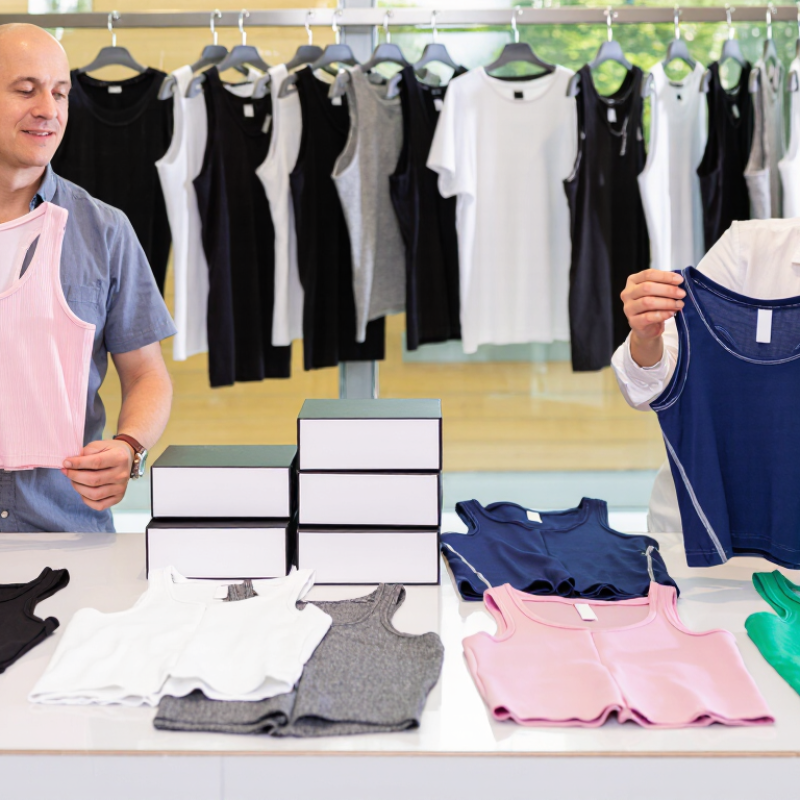
Tank Top Styles and Their Core Features
Global buyers usually compare tank tops by use, climate, and body movement.
Classic cotton tanks suit casual wardrobes and warm markets. Racerback styles support training because the shoulder area stays clear. Cropped tanks attract younger shoppers, while relaxed silhouettes offer easier layering.
Fit comes first.
The core features should be measurable.
A breathable cotton blend can feel soft against the skin, but recycled polyester often dries faster during exercise. Textile Exchange’s 2024 Materials Market Report states that polyester represented about 57% of global fiber production in 2023.
This figure explains its strong presence in performance tanks, but it does not make polyester suitable for every customer.
Fabric weight, stretch recovery, and seam placement still affect comfort. A well-cut armhole should allow movement without exposing too much skin.
Small details matter.
Market data also supports functional design.
Grand View Research estimated the global sports apparel market at about 203 billion US dollars in 2023 and forecast a 6.8% compound annual growth rate from 2024 to 2030.
Buyers therefore often request moisture management, flat seams, odor control, and UPF protection. However, “technical” claims need testing evidence, not attractive wording.
In supplier fittings, a tank may pass a studio inspection yet twist after repeated washing.
That weakness is easy to miss.
Size grading also deserves more attention, especially across regions. A single global block rarely fits everyone well.
Key Factors Shaping Global Buyer Preferences
Global buyers choose tank tops through more than color and price. Fit, fabric, climate, and intended use shape the decision.
Approximately $203.4 billion
Grand View Research valued the global sports apparel market at approximately $203.4 billion in 2023.
6.7% annual growth rate
It also forecasts a 6.7% annual growth rate from 2024 to 2030.
This growth supports demand for versatile tank tops used in training, travel, and casual wear.
Fit still matters. Buyers often compare shoulder width, armhole depth, body length, and stretch recovery.
A loose cut suits hot climates and relaxed styling. A closer cut supports active movement but can feel restrictive.
Fabric weight also changes buying behavior. Cotton feels familiar and breathable, while recycled polyester often offers quicker drying.
Textile Exchange reported that global fiber production reached about 124 million tonnes in 2023.
That figure shows the scale of material demand, but it does not prove that every buyer prefers recycled content.
A useful warning.
Price remains influential, especially when buyers purchase in quantity. However, low prices can create complaints about twisting seams, fading, or inconsistent sizing.
Professional sourcing teams usually request fabric specifications, measurement charts, wash-test results, and sample approval before larger orders.
Buyers also inspect packaging efficiency and delivery reliability.
These details seem ordinary. They affect repeat purchasing.
Regional preferences still vary, and online reviews may exaggerate both quality and defects. I would not treat one survey as a final rule. Tank-top demand is global, but preference is never completely universal.
Popular Tank Top Types Across International Markets
Global buyers increasingly choose tank tops by use, climate, and fabric performance. Grand View Research valued the global activewear market at approximately USD 412.3 billion in 2023. It also projects a 9.3% compound annual growth rate from 2024 to 2030. This wider market supports strong demand for racerback and moisture-wicking tank tops. These styles suit gyms, outdoor training, and warm urban commutes. Buyers often request breathable polyester blends, flat seams, and quick-drying finishes.
Cotton basics remain important across international markets. Retailers in Europe and North America often prefer soft, regular-fit tanks for layering and casual wardrobes. Ribbed and fitted tanks attract buyers seeking a closer silhouette. Oversized and boxy cuts continue to serve streetwear and leisure demand. In warmer Asian, Middle Eastern, and Latin American markets, lightweight fabrics and loose armholes can improve comfort. High-neck and longer-length designs may also support more coverage preferences.
The 2024 Textile Exchange Materials Market Report shows polyester remains the most widely produced fiber globally, while recycled polyester continues gaining attention. That supports requests for recycled performance fabrics, but price remains a barrier. Not every buyer accepts a higher cost. A practical assortment should include recycled options and reliable conventional fabrics. My experience with sourcing discussions suggests that color sell-through is often less predictable than expected. Black, white, navy, and muted earth tones usually provide safer volume, while bright seasonal colors require smaller test orders. This picture is useful, but incomplete. Local climate and consumer fit can change the result quickly.
Quality, Pricing, and Sourcing Considerations for Buyers
What Types of Tank Tops Do Global Buyers Prefer?
Global buyers usually seek tank tops that balance comfort, repeatability, and cost. Basic crew-neck styles remain strong because retailers can sell them across age groups and seasons. Ribbed cotton tanks feel softer and suit casual collections. Polyester blends attract activewear buyers because they dry quickly and keep their shape. Textile Exchange’s Materials Market Report 2024 recorded about 124 million tonnes of global fiber production in 2023. Polyester represented roughly 59%, while cotton accounted for about 19%. These figures explain why buyers compare both natural softness and synthetic performance.
Pricing decisions need more than the factory quote. Buyers should calculate fabric weight, sewing minutes, testing, packaging, freight, and possible defects. A 160 GSM cotton tank may look cheaper than a 200 GSM version, but it can shrink faster. McKinsey and The Business of Fashion’s State of Fashion 2025 highlights continued consumer pressure for value. Therefore, stable quality often supports better pricing than the lowest offer. Still, supplier claims deserve checking. Samples can hide uneven armholes, weak neck binding, or shade differences between production lots. Those details become expensive after delivery.
Tips:
Request three size samples and wash each one. Check shrinkage, twisting, pilling, colorfastness, and seam strength. Ask for fabric test reports and a clear tolerance sheet. Do not judge quality from photos alone. I have seen “premium” samples fail after washing, which is a useful reminder: sourcing assumptions need evidence.