Choosing a reliable Puffer Jacket manufacturer in China requires more than comparing factory prices. Buyers must examine product quality, production experience, communication, and supply-chain reliability. This guide introduces ten notable Chinese manufacturers and explains the factors behind their market reputation.
A strong supplier should understand insulation types, shell fabrics, baffle construction, stitching strength, and weather-resistant finishing. These details affect warmth, comfort, appearance, and long-term performance. Factory visits, sample reviews, and independent quality inspections can reveal more than promotional photographs. Ask about filling standards, fabric testing, production capacity, minimum order quantities, and delivery records. Request clear samples before approving bulk production.
Small details matter.
A smooth zipper can prevent customer complaints. Even stitch spacing can influence a jacket’s durability. Responsible manufacturers should also provide transparent business information and follow applicable labor, environmental, labeling, and product-safety requirements. Certifications may support trust, but they should be verified rather than accepted automatically. A certificate alone proves little.
The phrase “top ten” should not suggest a permanent ranking. Supplier performance can change with new equipment, staff turnover, material shortages, or growing orders. Some factories excel at fashion-focused designs, while others perform better with technical outdoor garments or large-volume production. This introduction aims to provide a practical starting point, not an unquestionable verdict. Careful buyers should compare evidence, test communication, and reassess every supplier before making a commitment. That extra caution may feel slow, but it often protects quality, timelines, and customer trust.
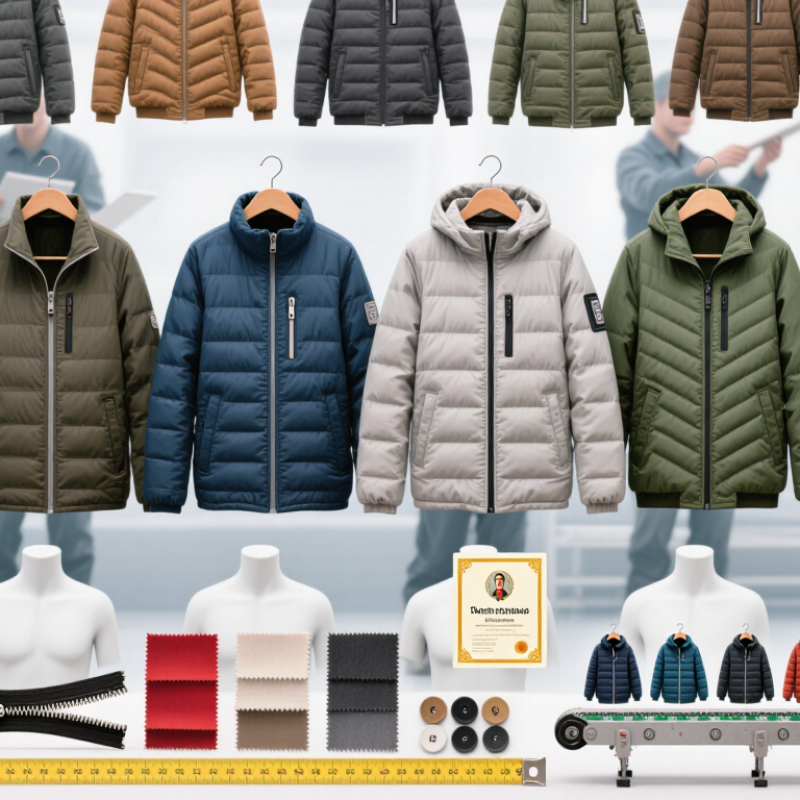
A leading puffer jacket manufacturer in China offers more than attractive pricing. It combines practical experience, technical knowledge, and dependable production control. Experienced teams understand how shell fabric, insulation, stitching, and quilting work together in cold weather. They test water resistance, colorfastness, seam strength, and filling distribution before large-scale production. Small details matter. A jacket should feel warm without becoming bulky.
Reliable manufacturers also provide clear material records and honest sampling timelines. They can explain the insulation type, fill weight, fabric performance, and production limits without vague promises. Strong quality teams inspect panels, zippers, cuffs, and labels at different stages. They also maintain consistent measurements across repeated orders. This consistency is often more valuable than a low first quotation. However, no factory is perfect. Delays, sampling changes, or uneven filling may still occur, so responsible communication matters. A trustworthy partner reports problems early and proposes practical corrections.
Tips: Request a detailed sample report, fabric test results, and a production checklist. Visit the facility when possible, or arrange a live quality inspection. Ask how rejected materials are handled. Compare several samples after washing, not only when they look new. Pay attention to cold spots near seams and loose threads. Good decisions come from evidence, not impressive promises.
Editorial sourcing-weight model for evaluating manufacturers without using company or brand data.
A leading puffer jacket manufacturer is typically assessed through product consistency, transparent insulation specifications, customization capability, compliance testing, delivery reliability, flexible order quantities, and sustainability practices. The chart uses a 100-point evaluation framework to show the relative importance of these factors when comparing suppliers in China.
Selecting the top ten Chinese puffer jacket manufacturers requires more than checking online rankings. I would begin with factory verification, production experience, and documented quality systems. A manufacturer should provide a real workshop address, clear ownership information, and recent production records. Virtual tours help, but physical audits offer stronger evidence.
Product performance receives careful attention. Evaluators review fabric durability, seam strength, zipper operation, down or synthetic filling consistency, and warmth retention. Sample jackets are tested after washing and repeated compression. Small details matter, such as even stitching around the hood and secure cuff construction. One failed sample can reveal weak process control.
Capacity must match the buyer’s needs. The review considers monthly output, seasonal lead times, material traceability, and inspection procedures. Export experience is useful, but it does not replace technical competence. Compliance documents, labeling accuracy, and responsible workplace practices are also checked against applicable market requirements.
Each manufacturer receives a weighted score instead of automatic praise. Quality may count more than price, while communication and delivery reliability remain important. This approach is practical, but not perfect. Public information can be incomplete, and a single audit may miss occasional defects. Small factories may also perform well but lack polished documentation. Therefore, the final list should be reviewed regularly through new samples, buyer feedback, and production follow-ups. No ranking stays accurate forever.
China Top 10 Puffer Jacket Manufacturers?
Profiles of China’s Top 10 Puffer Jacket Manufacturers
China’s leading puffer jacket manufacturers differ in equipment, materials, and production focus. The first profile represents a northern factory specializing in cold-weather jackets, with down-proof stitching and laboratory temperature testing. The second focuses on lightweight urban styles, using recycled nylon and compact quilting machines. The third serves outdoor retailers, offering water-resistant shells, taped seams, and reinforced zipper areas. The fourth is known for small-batch development and flexible sampling. It suits new collections.
The fifth profile describes a large coastal manufacturer with automated cutting rooms and strong monthly capacity. The sixth concentrates on children’s outerwear, with careful checks on drawstrings, trims, and filling distribution. The seventh produces premium-looking jackets with matte fabrics, narrow quilting, and cleaner edge binding. The eighth supports private-label programs and manages color matching through approved fabric swatches. The ninth specializes in oversized silhouettes and streetwear construction. Its fit samples need close review. The tenth combines down and synthetic insulation, helping buyers balance warmth, price, and maintenance.
Reliable sourcing requires more than impressive factory photos. Buyers should request filling reports, wash-test results, size charts, and recent production samples. Factory audits should examine needle control, storage conditions, worker training, and final inspection records. Some manufacturers communicate clearly but still miss small measurements. Others offer excellent sewing yet struggle with schedule changes. These weaknesses matter. A practical evaluation should compare sample quality, response speed, quality controls, and production consistency before placing a larger order.
A credible top-ten comparison needs more than factory photos. Product quality starts with fill power, down cleanliness, shell strength, stitching, and wash testing. The International Down and Feather Bureau recommends traceable testing for fill composition and performance. Request laboratory reports, not only supplier claims.
A jacket should feel light, but its baffles must prevent cold spots. Small details matter.
Materials also reveal manufacturing maturity. Textile Exchange’s Materials Market Report 2024 estimates global fiber production reached 124 million tonnes in 2023. Polyester represented about 57% of output, while recycled polyester accounted for roughly 12% of polyester production.
Therefore, compare recycled content, fabric denier, water resistance, insulation recovery, and certification scope. Recycled fabric is useful, but it does not automatically mean better durability. That assumption needs testing.
Capacity requires careful reading. A factory may advertise annual capacity, although actual winter output can be lower. Compare sewing lines, down-filling equipment, quality-control staff, lead times, and minimum order quantities.
Customization should include pattern development, color matching, trims, labels, packaging, and sample revisions.
In practice, the best supplier may not be the largest. A smaller plant can offer closer control, but it may struggle with sudden volume increases.
No ranking is perfectly objective; buyer audits, independent tests, and production records should carry more weight than polished presentations.
Choosing the right Chinese puffer jacket manufacturer starts with evidence, not a polished showroom. China supplied about 31% of global textile and apparel exports in 2023, according to the WTO World Trade Statistical Review 2024. That scale offers strong production capacity, but quality still varies widely. Request recent factory photos, production records, sample measurements, and independent laboratory reports before signing an order.
Check the filling carefully. Textile Exchange’s 2024 Materials Market Report states that polyester represented about 57% of global fiber production in 2023. This makes recycled and virgin insulation options widely available, yet their warmth can differ sharply. Ask for fill weight, insulation composition, loft, and cold-weather test results. A reliable manufacturer should explain these figures clearly. Vague claims are a warning.
Inspect one sample under practical conditions. Zip it repeatedly, rub the cuffs, and examine feather leakage after compression. Request testing for colorfastness, seam strength, water resistance, and chemical safety from an accredited laboratory. I would also compare the approved sample with the first bulk-production piece. They should match. Sometimes, they do not. A low quotation can hide weak stitching, unstable sizing, or costly rework. Confirm minimum order quantities, inspection stages, correction procedures, and delivery terms in writing. The best partner is not always the cheapest one. It is the manufacturer whose records remain consistent when production becomes difficult.
Comparative sourcing benchmark for selecting Chinese puffer jacket manufacturing partners. Figures are typical market ranges and should be verified directly during supplier evaluation.
| Rank | Manufacturer Profile | Typical Production Area | Core Product Strength | Typical MOQ | Sample Lead Time | Bulk Lead Time | Filling Options | Common Compliance Support | Best Fit For |
|---|---|---|---|---|---|---|---|---|---|
| 1 | Profile A | Zhejiang and Jiangsu | Fashion-focused lightweight and mid-weight puffer jackets | 300–500 pieces per style and color | 7–15 days | 35–55 days | Polyester padding, recycled synthetic insulation, down and feather blends | OEKO-TEX® fabric options, REACH documentation, third-party inspections | Fashion labels and online retailers |
| 2 | Profile B | Jiangsu | Large-volume basic outerwear and private-label programs | 800–1,500 pieces per style | 10–18 days | 40–60 days | Synthetic down alternatives and standard duck down | BSCI or SMETA audit support, AQL inspection, fiber-content testing | Established wholesalers and chain retailers |
| 3 | Profile C | Fujian | Outdoor, waterproof, windproof and technical jackets | 500–1,000 pieces per style | 10–20 days | 45–65 days | Synthetic insulation, responsibly sourced down subject to documentation | Water-resistance testing, colorfastness testing, seam-strength testing | Outdoor and performance-apparel brands |
| 4 | Profile D | Guangdong | Fast-fashion designs, short runs and frequent style changes | 200–400 pieces per style and color | 7–14 days | 25–45 days | Polyester wadding and recycled polyester fill | Restricted-substance testing and pre-shipment inspection | Startups, small brands and seasonal collections |
| 5 | Profile E | Hebei | Warm winter coats and high-fill-power down garments | 500–1,000 pieces per style | 12–20 days | 45–70 days | Duck down, goose down and synthetic alternatives | Down-content, cleanliness and filling-power test reports | Cold-weather markets and premium winter retailers |
| 6 | Profile F | Shandong | Cost-efficient padded jackets for mass-market distribution | 1,000–3,000 pieces per style | 10–18 days | 35–55 days | Standard synthetic padding and basic down blends | Basic product safety testing and final random inspection | Discount retailers and promotional apparel buyers |
| 7 | Profile G | Zhejiang | Recycled fabrics, eco-focused trims and sustainable packaging | 300–800 pieces per style | 10–18 days | 40–60 days | Recycled polyester insulation and certified down when available | Recycled-content certificates, OEKO-TEX® options and material traceability | Sustainability-oriented brands |
| 8 | Profile H | Jiangsu and Anhui | Uniforms, workwear and functional corporate outerwear | 500–1,500 pieces per program | 12–20 days | 45–65 days | Synthetic insulation and durable blended fills | Colorfastness, dimensional stability and workplace-wear testing | Corporate uniform and workwear purchasers |
| 9 | Profile I | Fujian and Guangdong | Urban lightweight jackets, packable styles and travel apparel | 200–600 pieces per style | 7–15 days | 30–50 days | Lightweight synthetic fill and low-bulk down options | Fabric performance testing and packaging compliance support | Travel, lifestyle and direct-to-consumer brands |
| 10 | Profile J | Guangdong and Zhejiang | Full-package development from design support to export packing | 300–1,000 pieces per style | 10–20 days | 40–65 days | Synthetic fill, recycled fill and down-based options | Social-audit coordination, product testing and export documentation | Importers requiring product-development assistance |