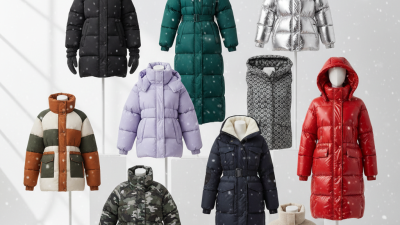
China Best Puffer Jacket Manufacturer Wholesale?
China remains a major sourcing base for winter apparel, supported by deep fabric, filling, and garment-making capabilities. WTO trade statistics consistently identify China as the leading apparel-exporting economy. That scale matters when buyers need stable wholesale supply.
The global Puffer Jacket market is growing, but published estimates vary by product definition. Grand View Research reports continued expansion in the global down jacket market, driven by colder urban lifestyles, outdoor recreation, and premium insulation demand. These figures are useful, not perfect. Synthetic padding, down garments, and fashion outerwear are often measured separately.
A reliable China manufacturer should offer more than a low quotation. Buyers should review factory experience, monthly capacity, fabric testing, filling traceability, and sample consistency. The Responsible Down Standard can help verify responsible down sourcing. Recycled polyester options may support sustainability goals, but certifications and transaction records still require checking.
Details reveal capability. Ask for a 600-fill-power sample, a wash-test report, zipper specifications, and carton measurements. Inspect baffle spacing and seam quality. Small defects become expensive at wholesale volume.
Quality control must be documented. ISO 9001 systems, laboratory reports, and clear pre-shipment inspections strengthen supplier credibility. The best partner also explains minimum order quantities, lead times, private-label options, and packaging limits.
Price alone misleads.
A practical sourcing decision compares landed cost, performance, communication, and production risk. China can provide strong value, yet every claim should be verified through samples, records, and independent testing.
What Makes China a Leading Puffer Jacket Manufacturer
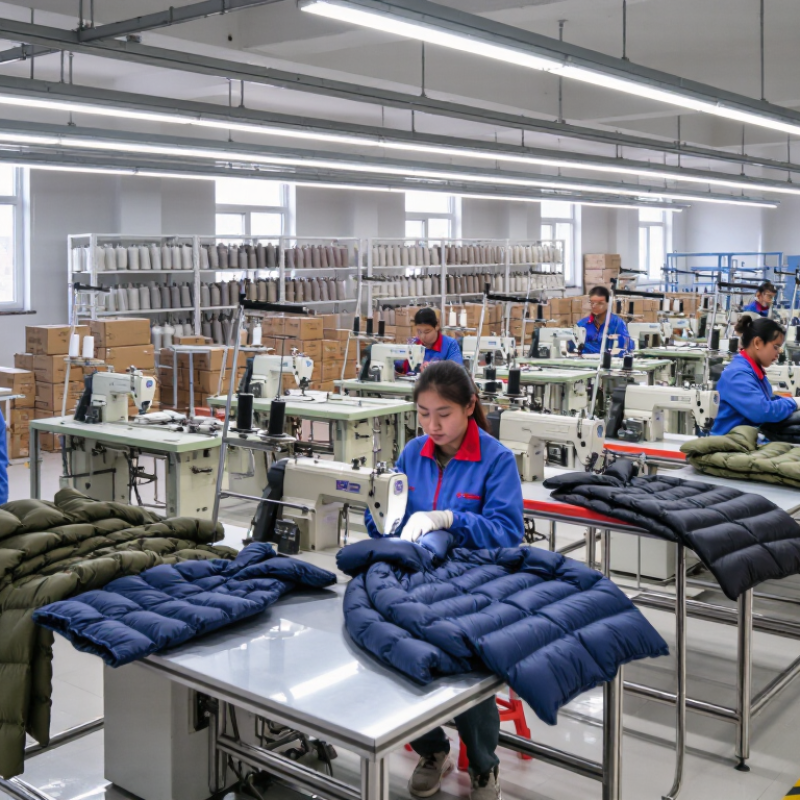
China’s strength as a puffer jacket manufacturer comes from a dense, connected supply chain. The WTO’s World Trade Statistical Review 2023 reported that China supplied about 31% of global textile and clothing exports in 2022. This scale supports faster access to shell fabrics, zippers, insulation, labels, and packaging. It also gives factories practical experience with seasonal outerwear production.
The advantage is visible on the factory floor. Automated cutting improves panel consistency, while controlled filling rooms help distribute down or synthetic insulation evenly. Production teams can test water resistance, colorfastness, seam strength, and thermal performance before shipment. UN Comtrade classifies padded outerwear under HS 6201 and HS 6202, where China remains a major exporting country. These trade records show manufacturing reach, not automatic quality.
Quality still depends on management. An experienced supplier should provide material certificates, inspection records, size samples, and clear production schedules. Buyers should also check filling weight, loft, stitching density, and wash performance. Small details matter. A warm jacket can still fail if the zipper catches or the cuffs stretch. China offers strong customization and competitive wholesale production, but factory selection requires careful auditing. Some suppliers communicate well but lack testing discipline. Others produce excellent samples yet struggle during bulk orders. That gap deserves attention.
How to Evaluate China-Based Puffer Jacket Suppliers
China Best Puffer Jacket Manufacturer Wholesale?
Choosing a China-based puffer jacket supplier requires more than comparing wholesale prices. Check the factory’s production experience, equipment, and quality control process. Ask for recent samples, not only catalog photos. Inspect stitching, zipper movement, lining strength, and filling distribution. Uneven quilting often becomes obvious after washing.
Request clear specifications for fill power, filling weight, fabric composition, sizes, colors, and acceptable defects. Reliable suppliers should provide relevant testing documents and explain how inspections are handled. A factory audit, video call, or independent quality inspection can reveal useful details. Still, no inspection is perfect. Small workmanship issues may appear during mass production.
Tips: Compare at least three suppliers. Confirm minimum order quantities and production timelines in writing. Ask how replacement or repair issues are handled. Test a sample after washing and drying. Check whether the supplier communicates clearly when problems arise. A low quotation may exclude packaging, inspection, or shipping costs. I have found that vague answers usually create expensive delays later. Allow extra time for revisions, especially when fabric or filling needs adjustment.
How to Evaluate China-Based Puffer Jacket Suppliers
This scorecard assigns practical evaluation weights to the main factors used when comparing puffer jacket suppliers. Product quality and compliance receive the highest priorities, while pricing should be assessed together with lead time, minimum order quantity, and communication reliability.
Puffer Jacket Materials, Designs, and Customization Options
A reliable China puffer jacket manufacturer should offer more than low wholesale prices. Material selection affects warmth, weight, durability, and customer comfort. Common shell fabrics include nylon and polyester, often treated with a water-repellent finish. Nylon feels smooth and light, while polyester can offer strong color stability and easier cost control.
Fill choices need careful testing. Down provides excellent warmth with low weight, but moisture can reduce its loft. Synthetic insulation performs more consistently in damp conditions and supports easier care instructions. Recycled fibers may suit buyers seeking lower-impact materials. Check fill weight, insulation distribution, fabric density, and stitching quality before approving bulk production. Small details matter.
Design customization can include hood shape, collar height, cuff construction, pocket placement, zipper type, quilting pattern, and garment length. A narrow baffle may create a cleaner appearance, while wider channels can improve loft. However, oversized baffles may allow insulation to shift. That mistake is easy to miss in a digital sample. A physical prototype is safer.
For wholesale orders, provide a clear tech pack with measurements, color references, artwork, labels, and packaging requirements. Request size-set samples and test colorfastness, seam strength, water resistance, and zipper performance. Confirm the minimum order quantity and production schedule in writing. Factory photos help, but independent inspection offers stronger evidence. I would not approve a jacket based on appearance alone.
Quality Control, Certifications, and International Shipping
China Best Puffer Jacket Manufacturer Wholesale?
Quality control should begin before fabric cutting. A reliable factory records down or insulation weight, fabric composition, seam strength, and thermal performance for every batch. ISO’s 2023 Survey reported over 1.2 million ISO 9001 certificates worldwide. Certification shows a management system, not perfect jackets. Buyers should verify the certificate scope, audit date, and factory address.
Ask for pre-production samples and an inspection plan with measurable limits. AQL sampling can check stains, broken zippers, uneven quilting, and incorrect labels. For a practical test, press each chamber, inspect loose threads, and measure filled weight. Small defects become expensive after shipment. I have learned that photographs can hide uneven padding. Physical samples still matter.
Shipping also needs technical control.
UNCTAD’s Review of Maritime Transport 2024 states that more than 80% of global merchandise trade by volume moves by sea. Use clear Incoterms, carton dimensions, moisture protection, and loading records. Puffer jackets should be packed in clean, dry cartons, with compression limits agreed in writing. Confirm customs documents, packing lists, origin details, and insurance before loading. Delays often begin with one missing field. Certificates help, but independent inspection and honest communication remain stronger safeguards.